

By Polco on March 12, 2026
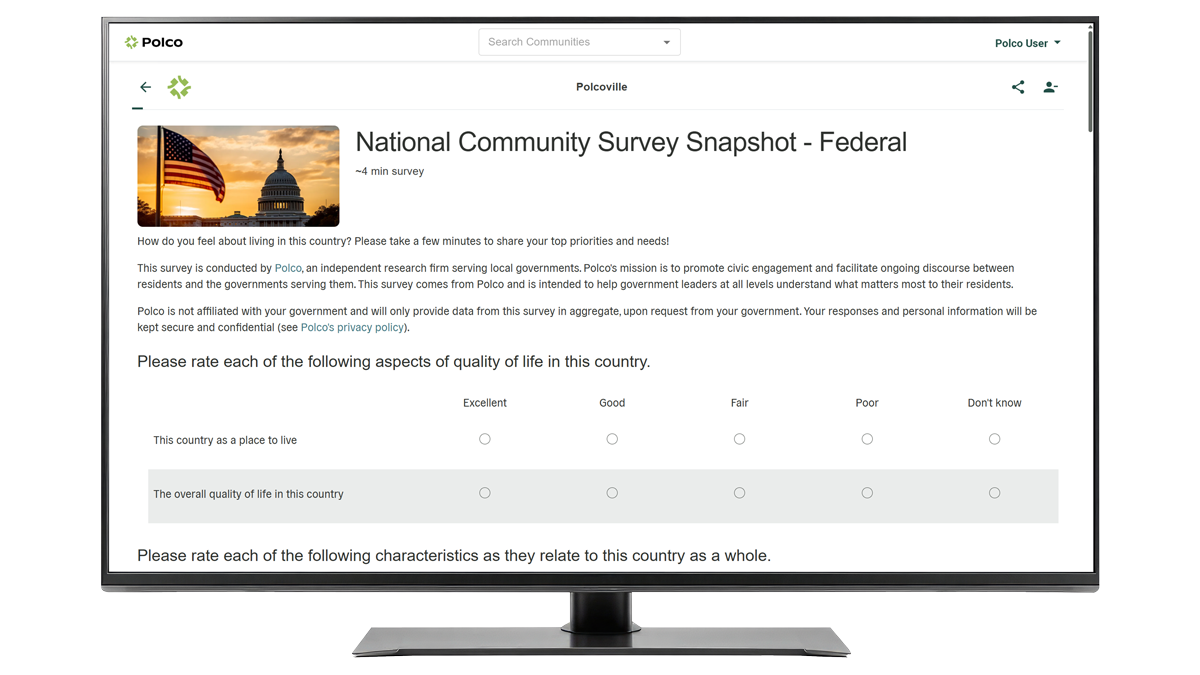
A statistically reliable survey starts with random selection, but strong methodology does not stop there.
Even well-designed community surveys can run into a familiar challenge. Some groups are historically less likely to respond than others. Younger residents, renters, and lower-income households often fall into this category. If these voices are consistently underrepresented, the final results can drift away from the true makeup of the community.
That is why representation requires more than randomness.
Why randomness alone is not always enough
Random selection is essential because it gives households a fair chance to be included. But fairness in selection does not always guarantee fairness in the final response pool.
If some groups respond at lower rates, their perspectives can still be missed or minimized. That can weaken the value of the data, especially for leaders trying to understand the full community rather than just the residents most likely to participate.
To address this, statistically reliable surveys often include additional steps that improve representativeness and reduce bias.
Oversampling helps reach harder-to-represent groups
One of those steps is oversampling.
Oversampling means intentionally selecting more households from groups or housing types that are often harder to reach, such as multifamily residences. This approach does not distort the results. In fact, when done correctly, it helps reduce distortion by improving the chances that underrepresented voices are included.
This is an important point. Oversampling is not about favoring certain groups. It is about correcting for known participation challenges so the final dataset more closely reflects the community as it actually exists.
Weighting helps align responses to real community demographics
Another important method is weighting.
After survey responses are collected, the data can be adjusted to better reflect the community’s demographics using trusted benchmarks such as U.S. Census and American Community Survey data. This helps account for the gap between who responded and who lives in the community.
The purpose of weighting is not to manipulate results. It is to improve accuracy and representation.
Done well, weighting helps decision-makers rely on findings with greater confidence because the data has been carefully aligned to the broader population.
Accessibility also shapes reliability
Survey quality is not only about statistics. It is also about access.
Even the best sample design can fall short if residents face unnecessary barriers to participation. Language access, participation modes, and clear instructions all affect who is able and willing to respond.
That is why strong community surveys are designed to meet residents where they are. Multi-language options can help include residents who might otherwise be excluded. Multiple ways to participate can broaden response. Clear respondent selection instructions within the household help reduce bias and keep the process fair.
These details may seem small, but they directly affect data quality. A reliable survey is not just carefully selected. It is thoughtfully delivered.
Reliable surveys build trust
At the local level, trust grows when residents believe decisions are informed, fair, and grounded in real community needs.
That is one reason representation matters so much. When survey methods are built to reduce bias and include a broader cross-section of the community, leaders gain a more dependable picture of what residents actually think.
That leads to better planning, better communication, and better decisions.
How Polco Helps Communities Measure What Matters Most
Reliable community data does not happen by chance. It comes from a survey process designed to reach the right households, reduce bias, and produce results leaders can stand behind.
That is where Polco Benchmark Surveys can help. Polco combines probability-based sampling, demographic weighting, multilingual access, and trusted national benchmarking to help local governments gather resident feedback that is both statistically reliable and practical for decision-making.
For communities that want more than anecdotal input, Benchmark Surveys offer a clearer, more credible view of resident priorities, satisfaction, and needs.
Learn how Polco Benchmark Surveys can help your community measure what matters and make decisions with confidence.


Referendum Ready: Preparing for a Successful Ballot Measure
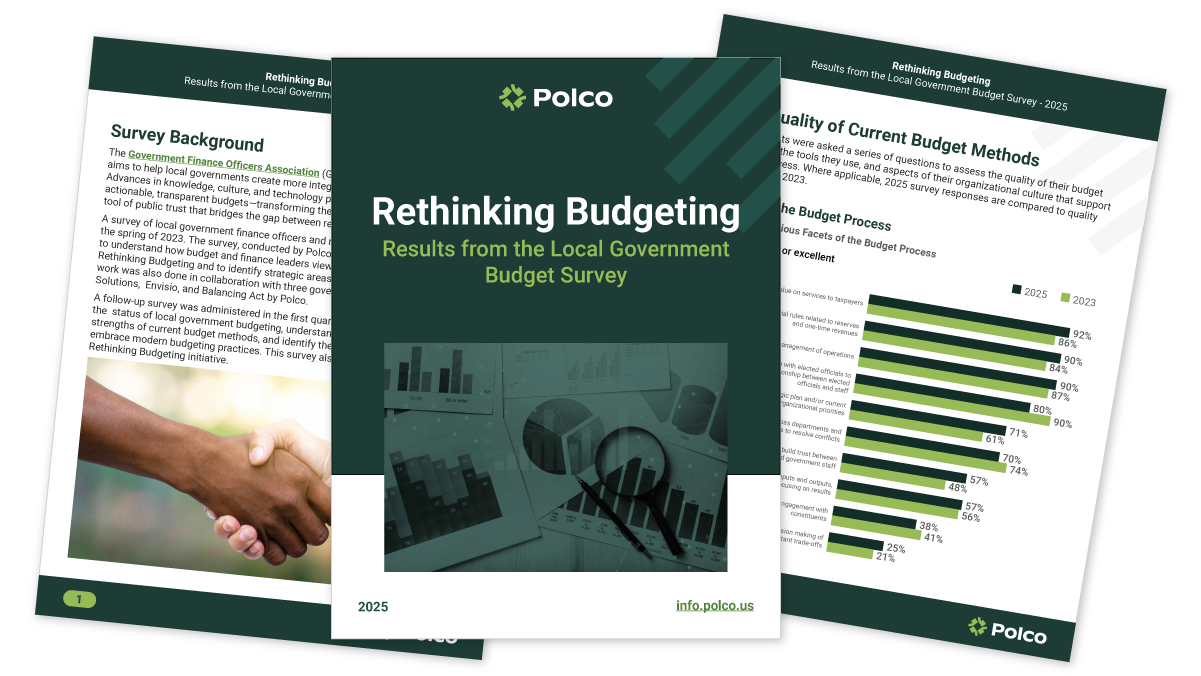
Local Governments Are Ready to Rethink Budgeting
.jpg)