

By Polco on January 12, 2026
Local governments across the country are facing a shared reality. Expectations are rising, resources are tighter, and legacy systems are struggling to keep up. Residents want fast, intuitive service. Staff are stretched thin. Leaders are being asked to do more with less, while maintaining trust and transparency.
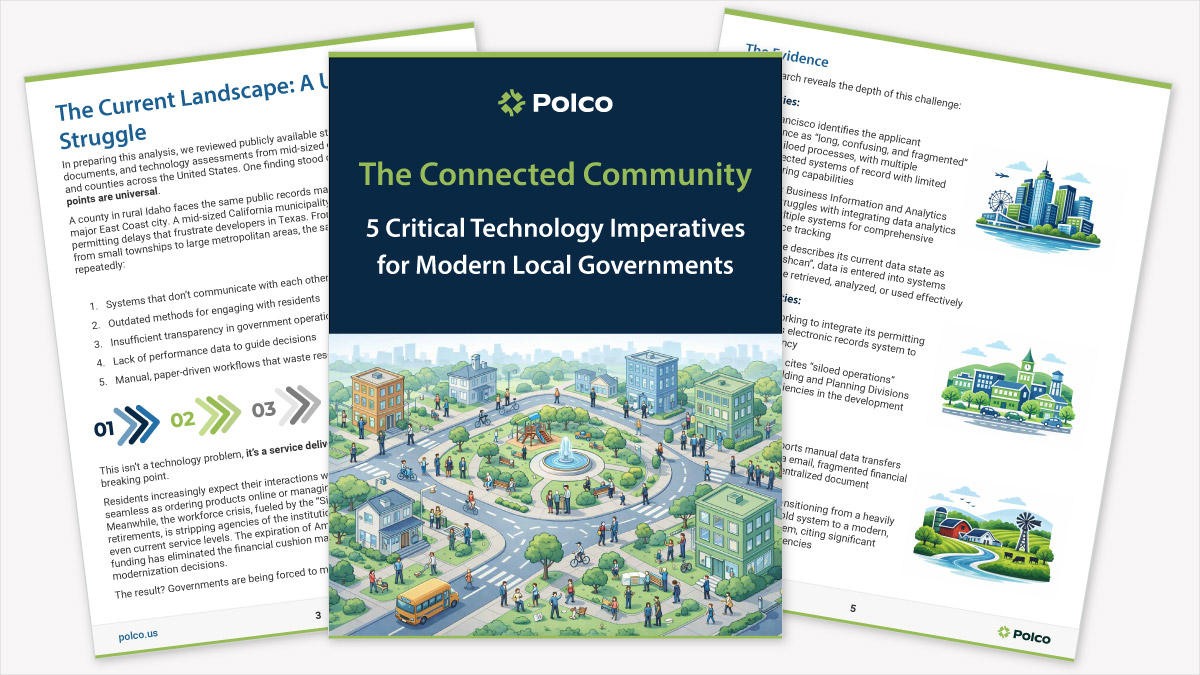
That is the backdrop for our newest white paper, The Connected Community: 5 Critical Technology Imperatives for Modern Local Governments.
This report is informed by strategic plans, technology roadmaps, and public documentation from more than 150 cities and counties nationwide. What we found was striking. No matter the size or location of the community, the challenges are remarkably consistent.
A Universal Struggle, From Small Towns to Major Cities
Whether it is a rural county or a large metropolitan city, local governments are wrestling with the same core issues:
- Systems that do not talk to each other
- Outdated ways of engaging residents
- Gaps in transparency that weaken public trust
- Limited performance data to guide decisions
- Manual, paper-driven workflows that waste time and talent
These are not isolated IT problems. They directly affect service delivery, staff morale, and the public’s experience with government.
As the white paper outlines, many organizations are now being forced to modernize not to innovate, but to survive. Workforce retirements are accelerating. Federal relief funding is expiring. Resident expectations are shaped by the seamless digital experiences they get everywhere else in their lives.
Five Technology Imperatives for the Connected Community
Rather than prescribing a long list of tools, the white paper focuses on five technology imperatives that successful communities are prioritizing today.
At a high level, those imperatives include:
- Breaking down silos with integrated systems
- Creating modern, two-way channels for resident engagement
- Building transparency into everyday government operations
- Using performance data to guide decisions, not just report on them
- Replacing manual workflows with connected, digital processes
The key insight is this. Progress does not come from buying more disconnected software. It comes from building a resident-centered ecosystem where systems, data, and engagement reinforce one another.
Communities that are succeeding are listening better, learning faster, and acting more effectively because their technology works together instead of in isolation.
Why This Matters Now
The cost of inaction is growing. Disconnected systems drain staff time. Manual processes increase errors and delays. Transparency gaps erode trust, even when teams are working hard behind the scenes.
At the same time, the opportunity has never been greater. Communities that invest in connected, modern approaches are seeing measurable improvements in efficiency, trust, and decision-making.
This white paper provides a clear roadmap grounded in real-world experience. It is designed for city managers, department leaders, IT professionals, and elected officials who want to move beyond incremental fixes and toward lasting transformation.
Download the Full White Paper
This blog only scratches the surface. The full report goes deeper into each imperative, with practical examples and guidance drawn from communities across the country.
If you are thinking about how to modernize service delivery, strengthen trust, or prepare your organization for the next decade, we encourage you to download The Connected Community: 5 Critical Technology Imperatives for Modern Local Governments.
Download the full white paper >>
Want to dive deeper? Don't miss our free webinar this week!
 On January 14, 2026, we're hosting a free webinar where we'll walk through the complete blueprint for modernization, with real examples, practical roadmaps, ROI data, and plenty of time for your questions.
This isn't about selling you software. It's about sharing what we've learned from 150+ jurisdictions and showing you the playbook that's working.
Who Should Attend:
- City Managers and County Administrators looking to build modernization strategies
- IT Directors and CTOs responsible for technology transformation
- Department heads frustrated by disconnected systems and manual processes
- Council members and commissioners who need to understand what modernization really means
- Anyone who knows their jurisdiction needs to change but isn't sure where to start

The Connected Community: 5 Technology Imperatives Every Local Government Is Facing
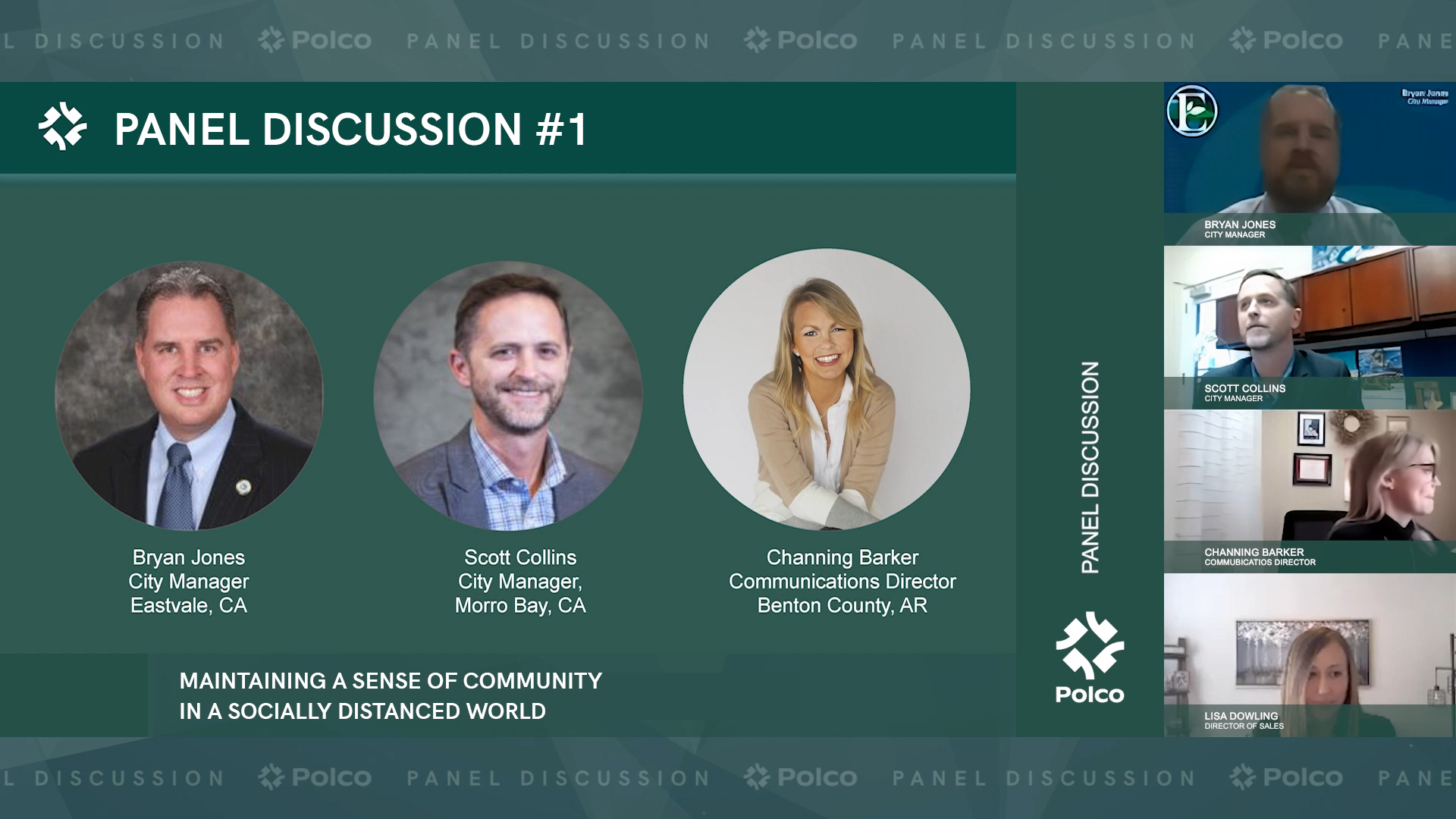
Deepening Local Government Community Engagement in a Socially-Distanced World
.jpg)