The engagement black hole
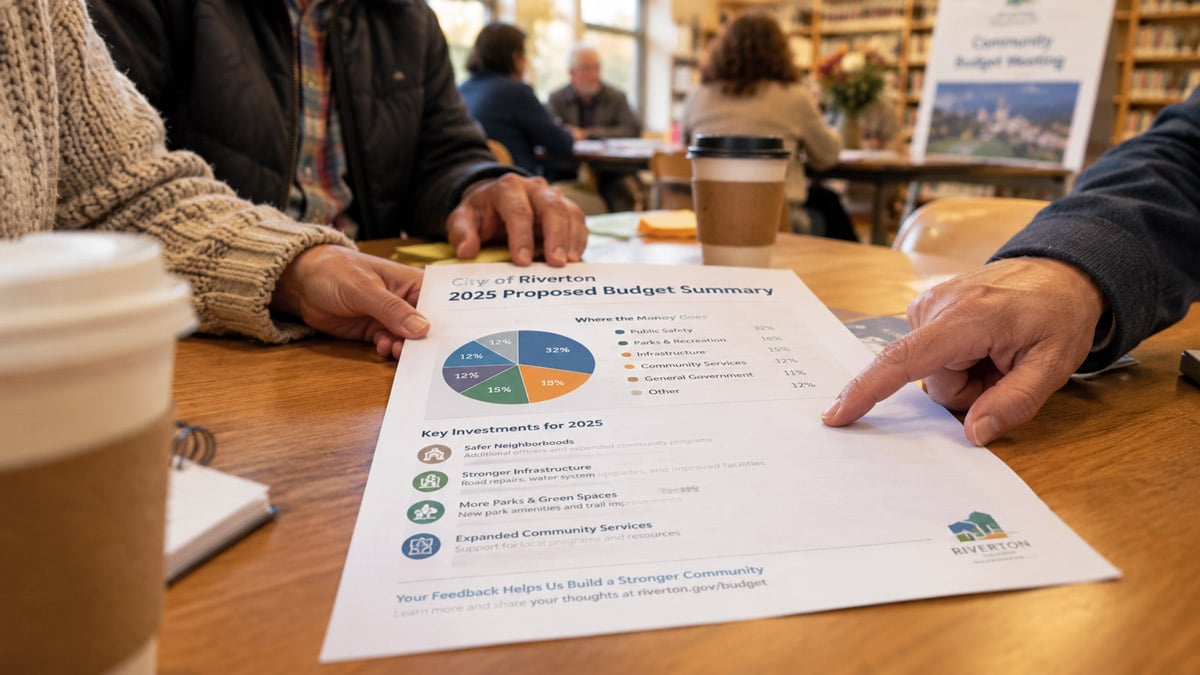
Budget season is over. The simulations closed, the surveys were tallied, the public hearings wrapped, and council adopted the budget. For most staff, that's the finish line.
For residents, it's often the moment the conversation goes silent. They shared their priorities, made tradeoffs, and told you what matters to them. Then they heard nothing back.
That silence is the engagement black hole: input goes in, and nothing visible comes out. It's one of the most common gaps in local government engagement, and one of the easiest to fix. Closing the loop after budget adoption takes a few weeks of focused communication, and it pays off every time you ask residents to weigh in again.Why closing the loop matters
Residents rarely expect to get everything they asked for. What they do expect is to know their input was heard and considered. When they can't see that, they draw their own conclusions: the decision was already made, or nobody read what they submitted.
Those conclusions follow you into next year. A resident who felt ignored this cycle is less likely to open your next survey, try your next budget simulation, or show up to your next public meeting. Over time, the people who stay engaged become a narrower slice of the community, and your data gets less representative.
Reporting back reverses that pattern. It shows residents that participation has a real effect, builds credibility for staff and elected officials, and turns a one-time exercise into an ongoing relationship.
What to share with residents
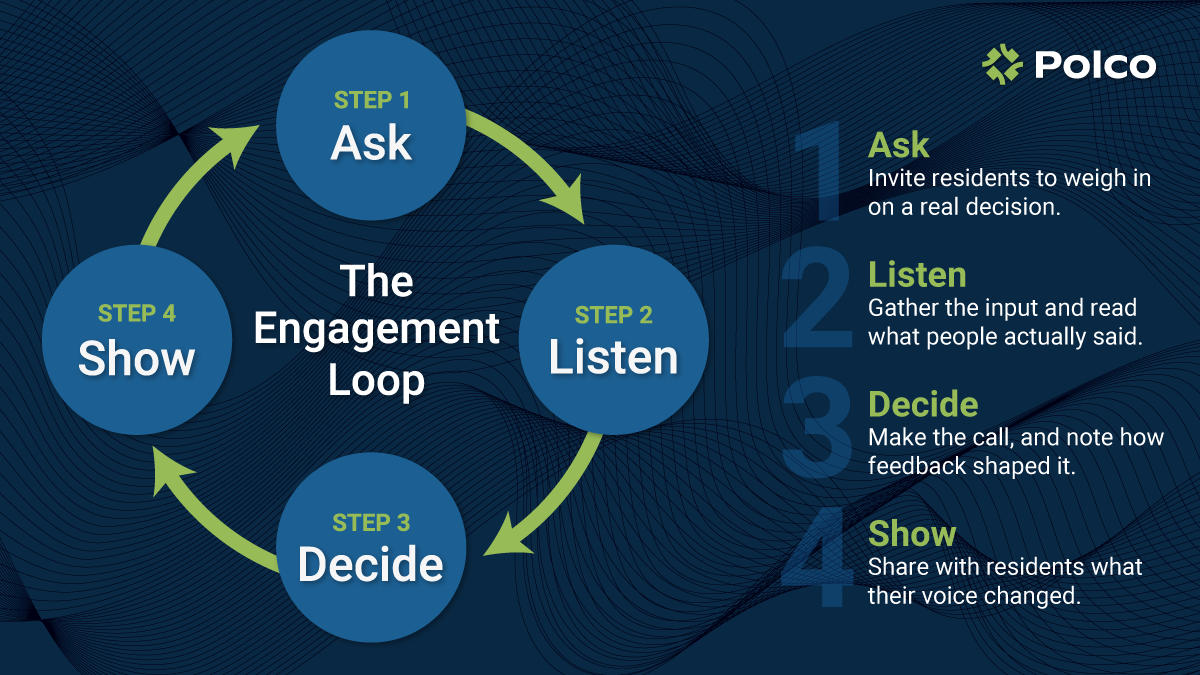
A good close-the-loop message answers three questions: what did residents tell us, what did we do, and why?
- What you heard. Summarize the top priorities residents identified, in plain language. Lead with the two or three themes that came up most, not a full data dump.
- Where the budget aligned. Point to specific line items or initiatives that reflect resident input, such as added road maintenance funding or extended library hours. Concrete examples are far more convincing than general statements.
- Where it didn't, and why. This is the part most governments skip, and it's the part that builds the most trust. If residents prioritized something the budget couldn't fund, say so and explain the constraint: revenue limits, state mandates, timing, or competing needs.
- Who participated. Share how many residents took part and, where you can, how representative the group was. This tells residents their voice was one of many and shows you're paying attention to who's at the table.
- What comes next. Tell residents when and how they'll be able to weigh in again.
Formats that work
You don't need a new campaign to close the loop. A few simple formats, reused across the channels you already have, will reach most residents.
- A one-page "You Said, We Did" summary. The core asset. Two columns: what residents prioritized on one side, how the adopted budget responded on the other. Post it on your website and link to it everywhere else.
- A slide in a council presentation. Bring resident input into the room where decisions are made. A single slide showing community priorities next to budget outcomes reinforces the connection for elected officials and anyone watching the meeting.
- Social posts. Break the summary into short, visual posts, one priority at a time. "You told us road repair mattered. Here's what's funded this year." is easier to share than a PDF.
- A newsletter feature. A short article in your resident newsletter or utility bill insert reaches people who don't follow you online.
- A direct thank-you to participants. If you collected contact information during engagement, send a short email with the summary. These are your most invested residents, and they're the most likely to share it.
Timing: when to report back
The best window is within 30 to 60 days of budget adoption. The process is still fresh for residents who participated, and the connection between their input and the outcome is easy to see. Wait until spring and most people will have forgotten they took part.
Plan for a second touchpoint mid-year. A short update on progress, such as a project breaking ground or a new service launching, reminds residents that the budget they helped shape is turning into real results. It also sets up the next engagement cycle naturally.
Use this year's results to set up next year
Closing the loop isn't only about this budget. It's the first step of the next one.
When you report back, tell residents what you learned about the process itself. Which channels reached the most people? Which neighborhoods or groups were underrepresented? Naming those gaps publicly signals that you plan to do better, and gives you a head start on outreach for the next cycle.
This is also a good time to compare this year's priorities with previous years. Shifts in what residents care about, like rising concern about housing or public safety, are worth flagging for staff and council before next year's planning begins.
How Polco can help
Polco's Budget Simulation gives you the raw material for a close-the-loop summary: a clear picture of the tradeoffs residents made and the priorities they ranked highest. Instead of interpreting scattered comments, you can show residents exactly what the community said, side by side with what the adopted budget funds.
Polco's resident engagement tools also make it easy to follow up with participants and invite them back for the next round.
Ready to make next year's budget engagement your most effective yet?
Learn more about Polco's Budget Simulation. >>