

By Polco on February 2, 2026
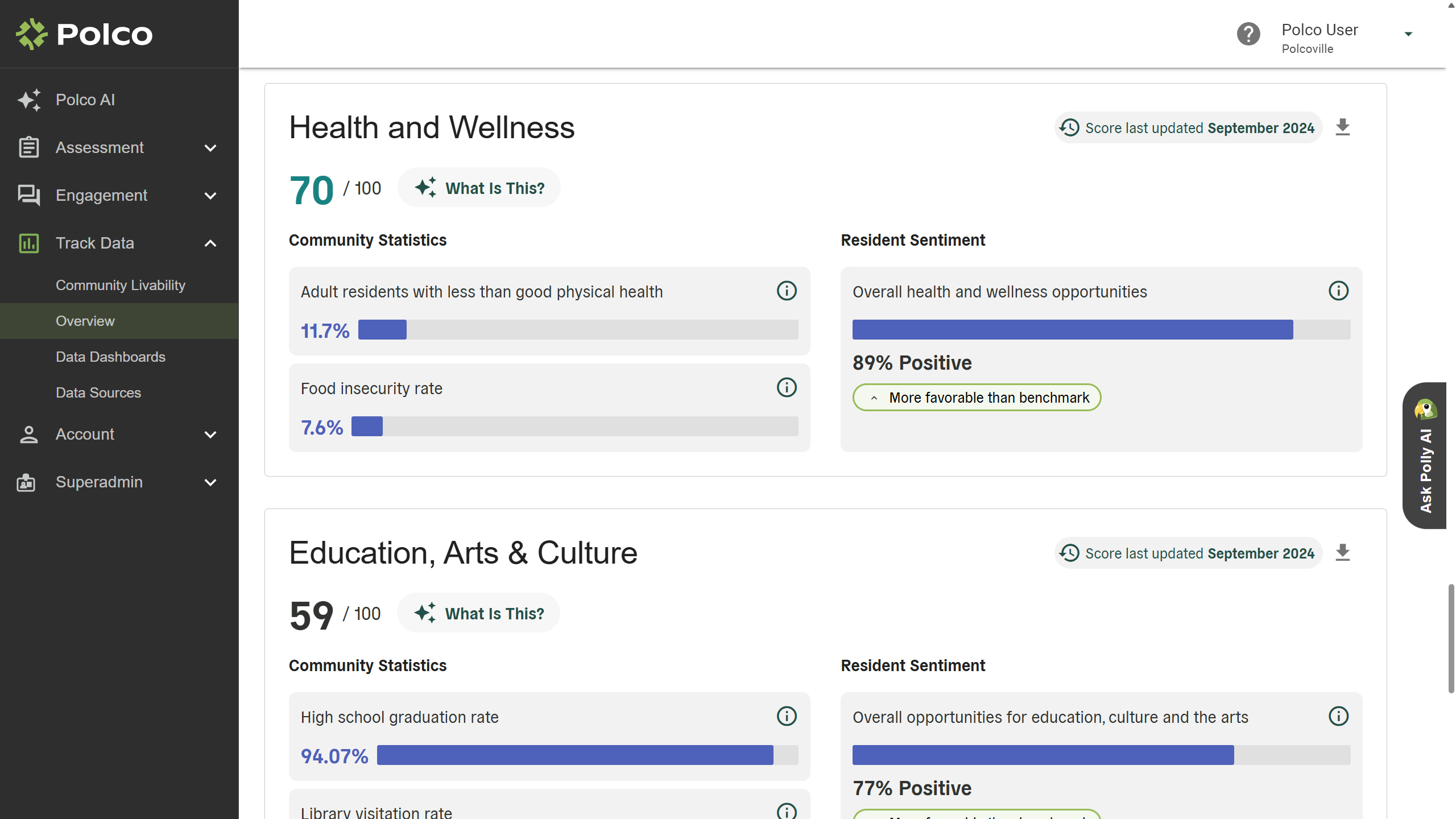
Data does not remove politics, but it does protect leaders.
Every local government leader eventually faces a decision that is necessary, defensible, and unpopular.
- Raising fees
- Reallocating budget dollars
- Changing service levels
- Updating land use rules
- Closing a facility that no longer meets community needs
In these moments, the loudest voices often dominate the conversation. Public meetings are filled with emotion, social media compresses complex trade-offs into soundbites, and leaders are left navigating criticism that feels personal, political, and relentless.
The mistake many governments make is assuming data will make the controversy disappear. It will not. However, when used correctly, data can do something far more valuable. Data can protect leaders by anchoring decisions in evidence rather than opinion.
Why Controversial Decisions Fail Without Evidence
When governments rely on anecdotes or limited engagement, opponents can easily dismiss decisions as out of touch or agenda-driven. Common accusations sound familiar.
- “No one asked us.”
- “This only benefits a few people.”
- “You already made up your mind.”
- “That is not what residents want.”
Without representative data, leaders are forced into defensive explanations instead of confident leadership. Even good decisions look arbitrary when there is no proof behind them. This is where Polco data fundamentally changes the dynamic.
Evidence Does Not Silence Critics. It Changes the Argument.
Polco data does not pretend to create consensus. Instead, it reframes the conversation. Rather than debating whose opinion matters most, leaders can point to what the community actually says when asked fairly, systematically, and at scale.
Probability-based benchmark surveys, like The National Community Survey™, capture input from residents who may never show up to meetings or comment online. The result is not louder voices. It is a clearer reflection of the community.
When leaders can say:
- “We heard from a representative cross-section of our community.”
- “We understand how different groups experience this issue.”
- “We tested trade-offs before finalizing this direction.”
The debate shifts from speculation to substance. That shift is political protection.
Using Polco Data as Decision Support, Not Just Reporting
The most effective leaders use Polco data before decisions are finalized, not after they are announced. Here is how that looks in practice.
Clarifying Trade-Offs
Budget simulations and prioritization tools allow residents to experience the same constraints leaders face. When people see that funding one priority requires cutting another, conversations become more grounded and realistic.
Validating Direction
Benchmark surveys show whether concerns raised by a vocal minority reflect broader community sentiment. Leaders gain confidence knowing whether an issue is widespread or localized.
Anticipating Pushback
Disaggregated data reveals which groups are likely to be most impacted or concerned. This allows governments to prepare targeted communication and mitigation strategies before backlash begins.
Documenting Due Diligence
When decisions are challenged, leaders can demonstrate that choices were informed by data, community input, and peer comparisons. This matters for councils, auditors, courts, and the public.
Polco data does not tell leaders what to decide. It helps them explain why they decided.
Transparency Builds Trust, Even When People Disagree
One of the most overlooked benefits of evidence-based decision-making is credibility. Residents are far more willing to accept outcomes they dislike when they believe the process was fair, inclusive, and informed.
Sharing Polco results publicly reinforces three critical messages.
- We listened.
- We measured.
- We decided with intention.
Even disagreement becomes more constructive when people understand how conclusions were reached. This is especially important in polarized environments, where trust in institutions is fragile. Data alone does not rebuild trust. But opaque decision-making destroys it quickly.
Leadership Is Hard. Evidence Makes It Defensible.
Local government leadership will always involve trade-offs and criticism. That is unavoidable. What is avoidable is making those decisions without evidence.
Polco exists to support leaders in the moments that matter most. When choices are controversial. When emotions run high. When clarity and credibility are essential. Data does not remove politics, but it gives leaders something solid to stand on.


How Collinsville Transformed the Local Economy Through a Diverse Approach to Development
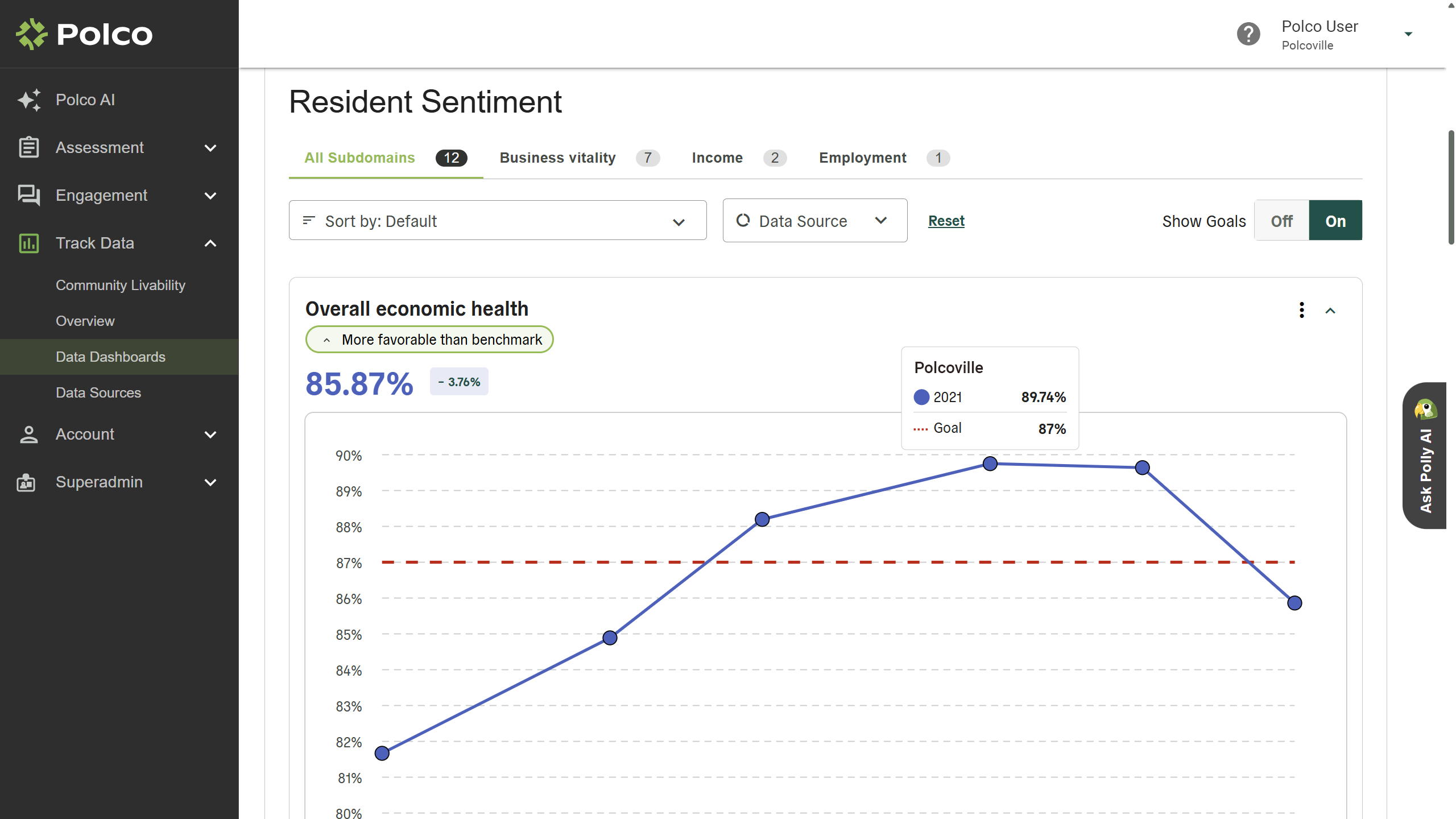
Track Is Not Just a Dashboard. It’s a Decision Engine.