
By Polco on April 17, 2026

What makes a community truly thrive?
It is not just population growth or budget size. It is how people feel about where they live. It is whether services work. It is whether leaders can see problems early and act with confidence.
Today’s most effective local governments are not guessing. They are measuring.
With modern tools like benchmarking surveys, analytics dashboards, and continuous engagement platforms, cities can finally track what matters most with clarity and precision.
Here are the 10 most important community metrics every city should be tracking and how data tools like Polco make it possible.
1. Overall Community Satisfaction
This is the north star metric.
How satisfied are residents with their community as a place to live? This single measure captures perception across safety, services, economy, and quality of life.
Benchmark surveys like The National Community Survey® provide statistically valid satisfaction scores and allow cities to compare themselves to peer communities nationwide.
Why it matters:
If satisfaction is declining, something deeper is wrong. If it is rising, your strategy is working.
2. Quality of Government Services
Residents interact with services every day. Trash collection, police response, parks, utilities.
Tracking service performance through resident feedback reveals what internal metrics often miss. Polco surveys combine satisfaction ratings with qualitative input, giving both numbers and context.
Why it matters:
Operational data shows what happened. Resident feedback shows how it felt.
3. Public Safety Perception
Crime statistics only tell half the story.
Do residents feel safe walking at night? Do they trust law enforcement? These perception-based metrics are essential for understanding real community safety.
Benchmark surveys measure both objective and perceived safety, helping leaders identify gaps between data and lived experience.
Why it matters:
Perception drives behavior. If people do not feel safe, they disengage from their community.
4. Trust in Local Government
Trust is fragile. And once lost, it is difficult to rebuild.
Cities need to consistently measure whether residents believe leaders are transparent, responsive, and acting in their best interest.
Modern engagement platforms reinforce trust by closing the loop. Share results, act on feedback, and communicate progress.
Why it matters:
Trust determines whether residents support policies, budgets, and long-term initiatives.
5. Civic Engagement and Participation
Are residents showing up? Are they participating in surveys, polls, and public conversations?
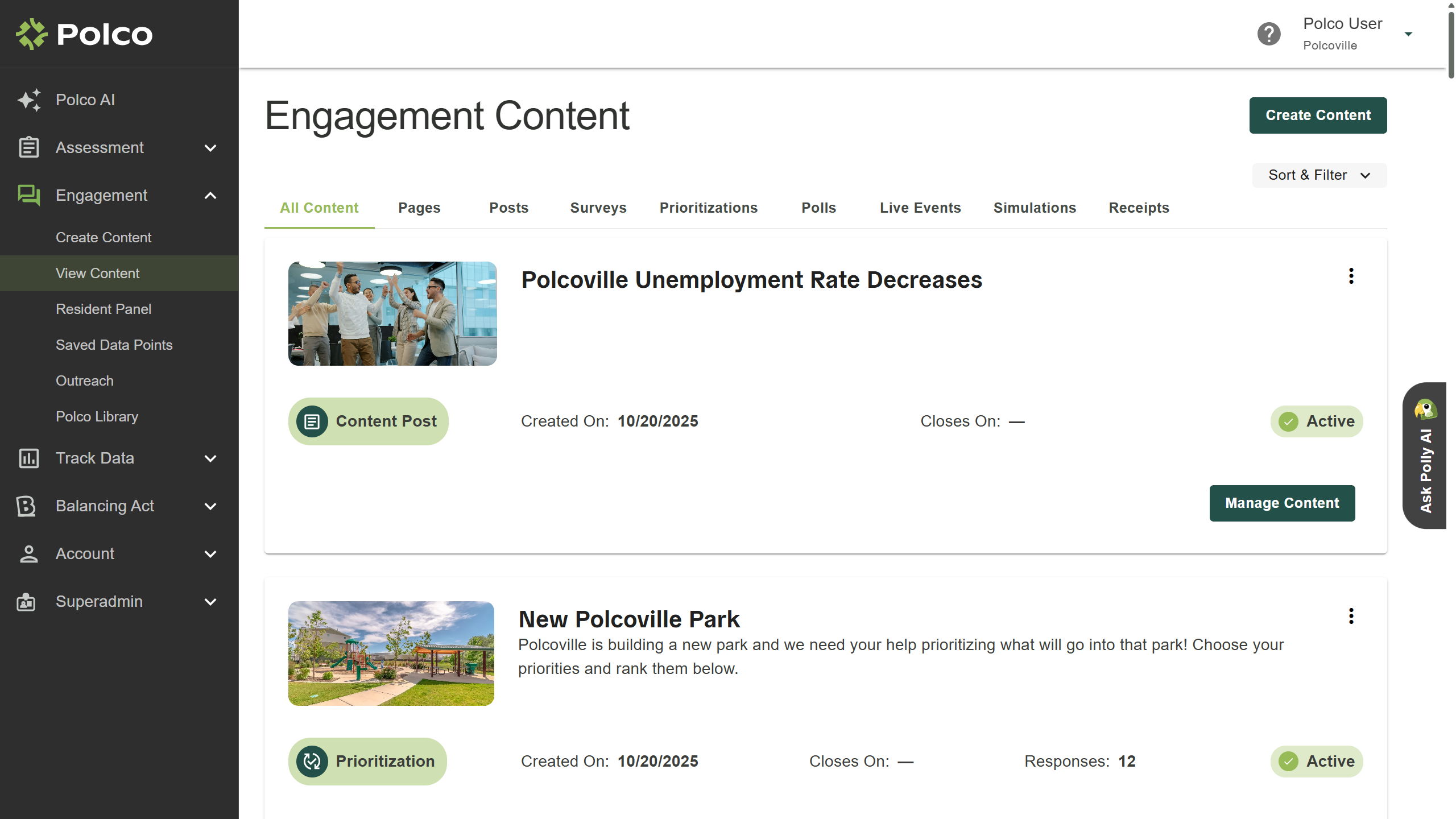
Tools like Polco’s engagement platform track participation rates across surveys, polls, and digital interactions, giving leaders a real-time pulse on engagement.
Why it matters:
Low engagement often signals disengagement or distrust. High engagement signals opportunity.
6. Economic Health and Opportunity
A thriving economy is foundational to livability.
Cities should track metrics like job availability, income levels, and business vitality alongside resident perceptions of economic opportunity.
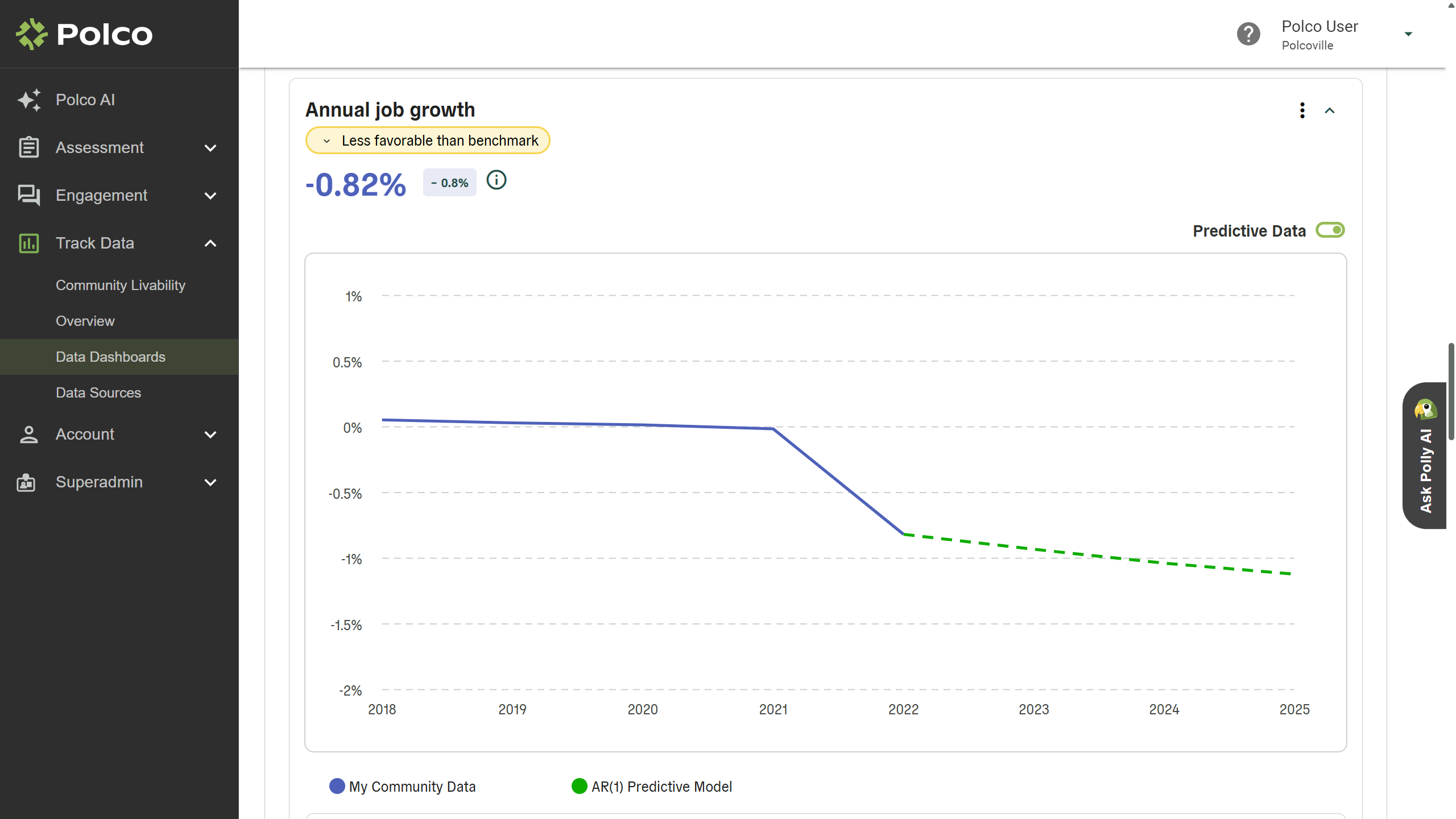
Analytics dashboards bring these indicators together in one place, enabling benchmarking and trend analysis over time.
Why it matters:
Economic conditions shape everything from housing to health to long-term population growth.
7. Housing and Community Design
Can people afford to live here? Do neighborhoods feel livable and connected?
Housing affordability, development patterns, and neighborhood quality are central to community satisfaction. Surveys and analytics help identify where gaps exist and which populations are most affected.
Why it matters:
Housing challenges quickly become economic, social, and political challenges.
8. Mobility and Transportation
Mobility is about more than roads. It includes walkability, bike access, public transit, and ease of commuting.
Benchmark surveys measure resident satisfaction with transportation systems and identify where improvements are needed.
Why it matters:
Mobility directly impacts access to jobs, education, and quality of life.
9. Health and Wellness
Healthy communities are resilient communities.
Cities should track both objective health indicators and resident perceptions of wellness, access to care, and recreational opportunities.
Survey tools and data integrations allow leaders to connect health outcomes with environmental and social factors.
Why it matters:
Wellness influences productivity, happiness, and long-term community sustainability.
10. Equity and Inclusivity
Who is being heard? And who is not?
Modern community measurement must go beyond averages. Demographic data collected through surveys ensures cities can identify disparities across income, race, age, and geography.
Why it matters:
You cannot fix what you cannot see. Equity requires visibility.
How Benchmarking Surveys and Analytics Bring It All Together
Tracking these metrics individually is valuable. But the real power comes from integration.
Benchmarking surveys provide statistically valid, representative data across all major domains of livability, often covering over 100 metrics in a single effort.
Analytics platforms then transform that data into:
- Interactive dashboards
- Peer comparisons
- Historical trends
- Goal tracking
Together, they create a continuous feedback loop:
Measure → Analyze → Act → Re-measure
This is how modern governments move from reactive to proactive decision-making.
From Data to Action: The Real Goal
Collecting data is not the end goal. Using it is.
The most successful communities do three things consistently:
- Share results transparently to build trust
- Prioritize actions based on data to maximize impact
- Follow up and measure progress to show accountability
When residents see their feedback driving real change, participation grows. Trust deepens. Outcomes improve.
Final Thought
The cities that will thrive in the next decade are not the ones with the most resources. They are the ones with the clearest understanding of their communities.
By tracking the right metrics and leveraging tools like benchmarking surveys and analytics , leaders can move beyond assumptions and lead with confidence.
Because when you can see clearly, you can act decisively. And that is how stronger communities are built.
With Polco’s Benchmarking Surveys, Community Analytics, and Engagement Tools, you can measure what matters, understand your residents, and turn insight into action. If you’re ready to see your community more clearly and lead with confidence, Polco can help.


The Rise of Data-Driven Cities: How Community Analytics Is Shaping Better Policy
Why Resident Feedback Is the Missing Link in Local Government Decision-Making