

By Polco on March 16, 2026
Local governments are responsible for decisions that shape everyday life. Roads, parks, housing, transportation, public safety, and community development all depend on effective policy choices. Yet many of these decisions are still made with limited direct input from the people who experience the outcomes every day.
That gap between decision-making and community voice is one of the biggest challenges facing modern government. The good news is that it is also one of the most solvable.
Why Traditional Engagement Methods Fall Short
Historically, local governments have relied on a small set of engagement methods:
- Public meetings
- Advisory boards
- Comment periods
- Email feedback
While these approaches are important, they often capture input from only a small portion of the community. The residents who attend public meetings tend to be the most vocal or most available. Many others cannot participate due to work schedules, childcare, transportation, or simply lack of awareness.
This creates a skewed understanding of community priorities. Modern civic engagement must go beyond the microphone at the podium.
The Value of Broad, Representative Input
When governments collect input from a wider and more representative group of residents, the quality of decision-making improves dramatically.
Representative surveys and engagement tools allow leaders to understand how different groups experience their community. These insights can reveal patterns that might otherwise go unnoticed.
For example, a city may discover:
- Transportation challenges affecting specific neighborhoods
- Safety concerns that vary by age group
- Differences in park access across the community
- Gaps in awareness about available services
With reliable data, leaders move from assumptions to evidence.
Turning Community Voice Into Actionable Data
Collecting feedback is only the first step. The real impact comes from translating that input into clear insights that inform policy and planning.
When resident feedback is paired with data analytics and benchmarking, governments can:
- Measure community satisfaction across key quality-of-life indicators
- Compare results with similar communities nationwide
- Identify emerging trends before they become major problems
- Track progress over time
This approach transforms engagement from a one-time exercise into a continuous feedback loop.
Building Trust Through Transparency
One of the most powerful outcomes of resident engagement is trust. When people see that their input is being gathered, analyzed, and shared openly, they gain confidence that their voice matters.
Trust grows when governments:
- Share survey results publicly
- Explain how feedback influenced decisions
- Provide updates on progress and outcomes
Over time, this transparency strengthens the relationship between residents and the institutions that serve them.
The Future of Community Decision-Making
Cities and counties across the country are beginning to recognize that strong communities are built through collaboration. By combining data insights with meaningful resident participation, governments can make smarter decisions and deliver services that truly reflect community priorities.
The future of local governance is not simply about collecting more data. It is about listening better. And when governments listen better, communities thrive.
How Polco Helps Governments Listen Better
Modern community engagement requires more than collecting comments. It requires tools that gather representative input, translate feedback into reliable insights, and make those insights easy for leaders and residents to understand.
Polco helps governments do exactly that.
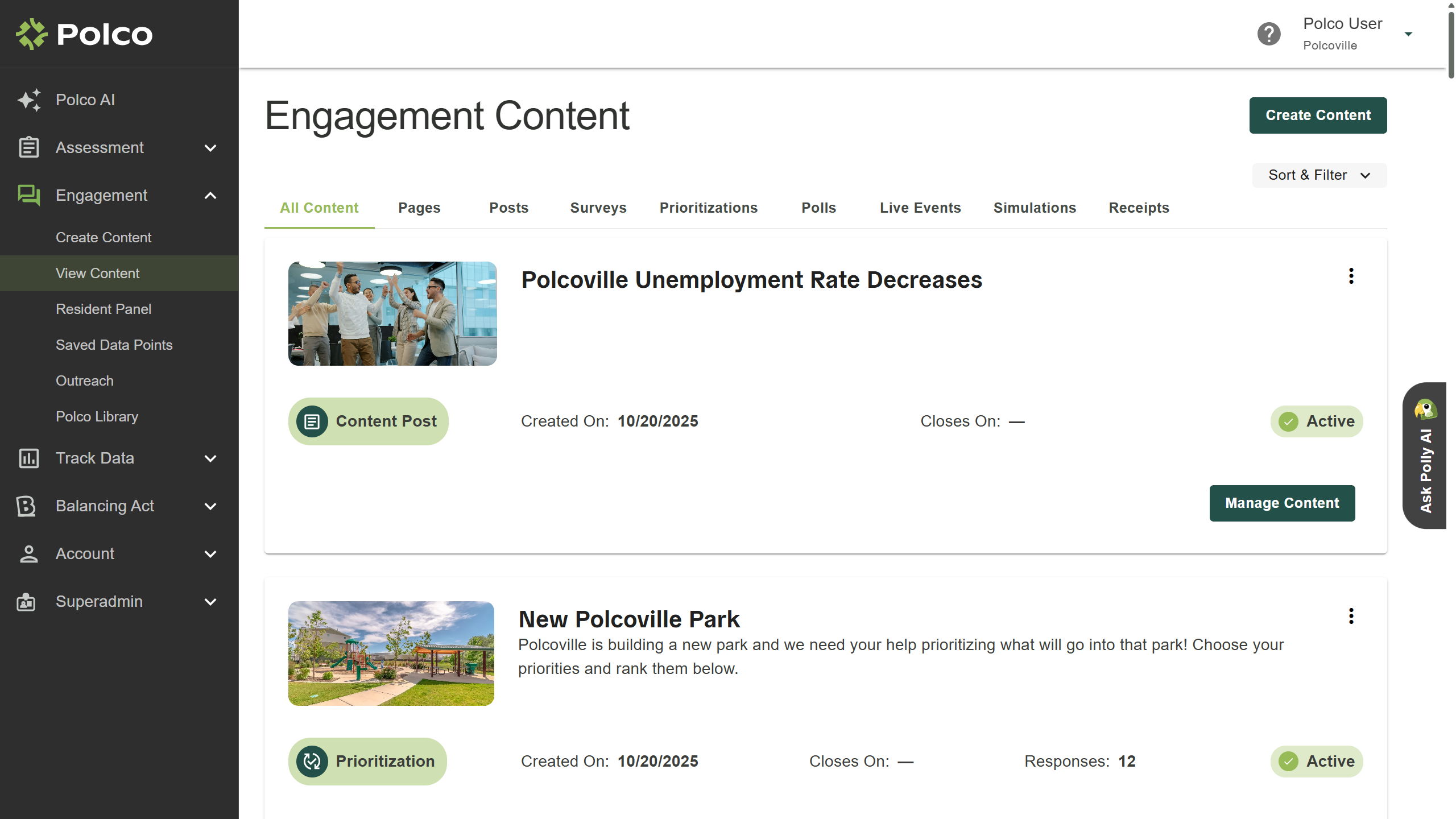
Through scientifically valid benchmark surveys, ongoing digital engagement tools, and advanced analytics, Polco enables leaders to hear from a broader and more representative cross-section of their community. These tools transform resident feedback into measurable data that supports smarter planning, budgeting, and policy decisions.
Instead of relying solely on public meetings or anecdotal feedback, local governments can use the Polco Platform to measure community priorities across key quality-of-life areas, compare results with peer communities nationwide, and track changes over time.
Equally important, Polco helps close the feedback loop. Governments can share results transparently, demonstrate how resident input influenced decisions, and continue the conversation through ongoing engagement opportunities on a centralized platform.
The result is a more collaborative model of governance where community voice and data-driven insights work together. And when that happens, better decisions follow.
See How Polco Can Support Your Community
If your organization is looking to move beyond traditional engagement methods and gather meaningful, representative community input, Polco provides the tools to make it possible.
Learn how Polco helps local governments turn resident voice into data-driven decisions. Explore the Polco platform or connect with an engagement expert today.

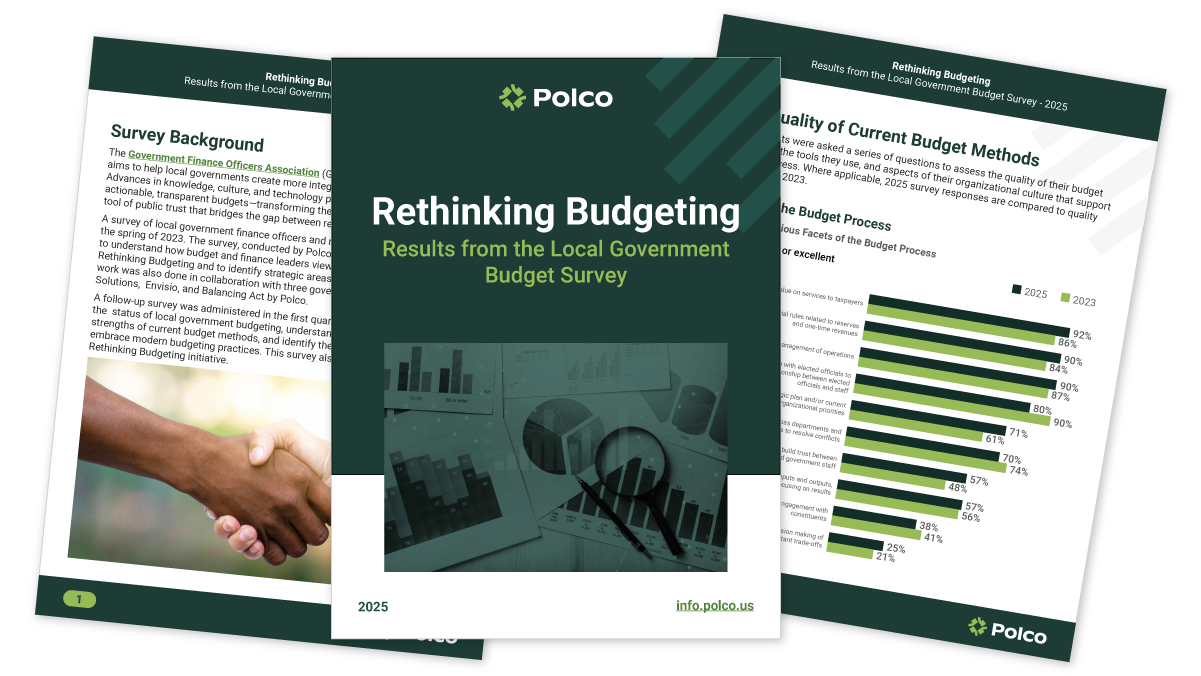
Local Governments Are Ready to Rethink Budgeting

Why Polco's Rethinking Budgeting Tools are Essential for Transparent and Effective Budget Planning