
Inside Polco's Engage Platform: Turning Resident Input Into Decisions You Can Defend
By Polco on August 14, 2026
Every local leader knows the pattern. A budget hearing draws the same dozen faces. A comment period fills with reactions to a plan that is already mostly written. A survey tells you what people like, but not what they would give up to get it. You walk away with opinions, and you still have to make the hard call about where limited dollars go.
Polco's Engage platform was built to change that. Instead of collecting reactions, it puts residents inside the real tradeoffs and gives you back structured, representative data you can take to a council meeting. Over the past year we have rebuilt and expanded the tools at the center of that platform, and this is a good moment to show you what they do and where they fit.
What the Engage platform is
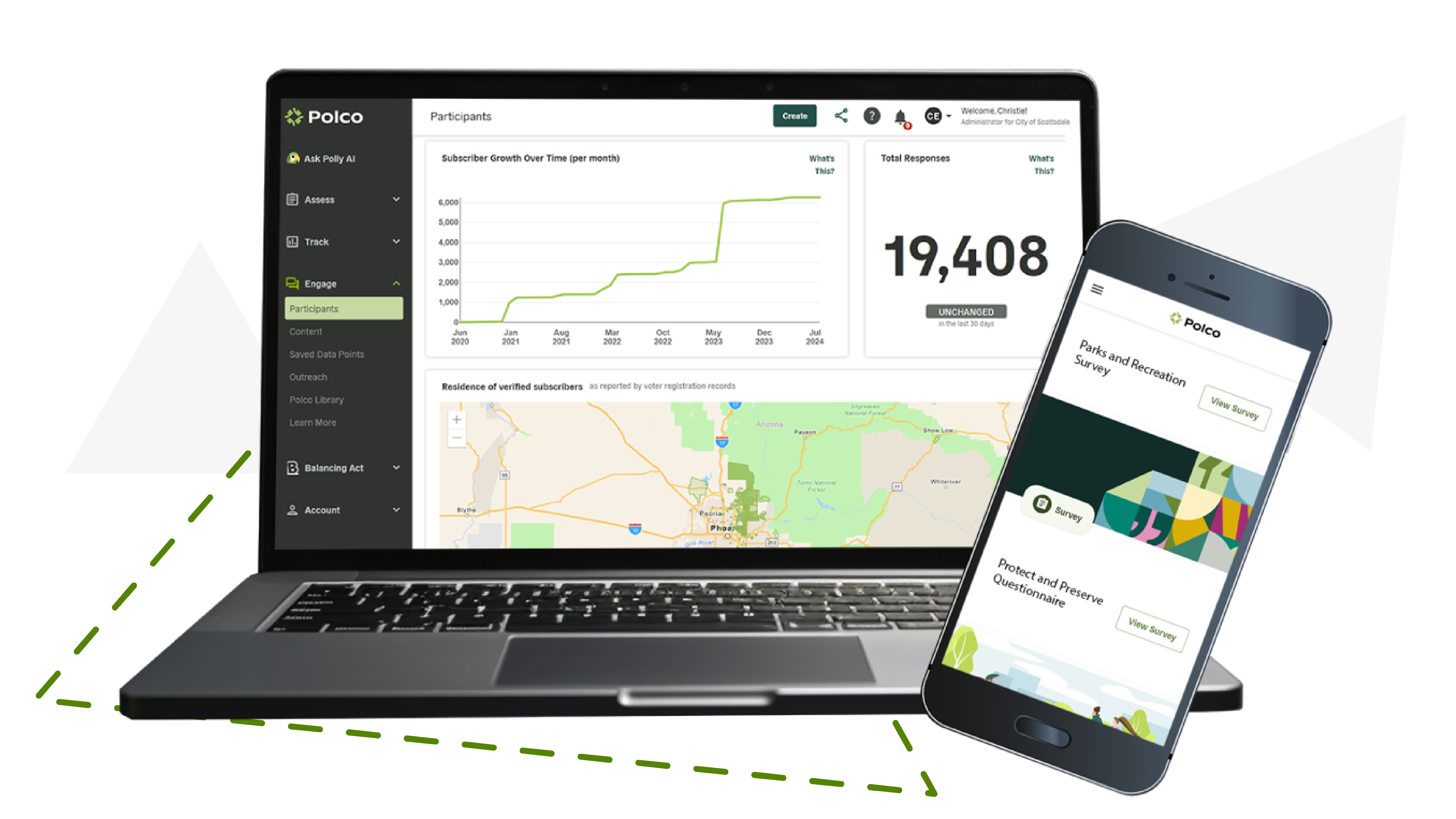
Engage is Polco's connected system for hearing from your community and turning that input into decisions. Polls capture quick reads. Surveys go deeper. Engagement Pages pull a whole initiative into one branded hub so a project's polls, surveys, and simulations live in one place as it moves through its phases. And two interactive decision tools, Budget Simulation and Prioritize, do something the others cannot: they make residents balance competing priorities under real limits.
The important part is that these tools are not separate products bolted together. They share the same platform, the same standardized demographics, the same automatic weighting, and the same results infrastructure. That is what lets you compare across tools, weight results to your community, and trust that a number from a poll and a number from a simulation are speaking the same language.
Budget Simulation: let residents feel what governing takes
Budget documents are hard to read, and asking residents to react to a finished budget rarely produces useful input. Budget Simulation flips the exercise. You load your real revenue and expense data, and residents use sliders, direct entry, and choice questions to build the budget they would actually want. A live balance bar at the top shows whether their choices produce a balanced budget, a surplus, or a deficit, and by exactly how much. They cannot fund everything, and they feel it.
We rebuilt this tool natively inside the Polco platform, and the rebuild delivered three upgrades that matter to the people who run these projects. Setup is much easier, starting from templates and an intuitive builder rather than a heavy configuration process. Management is far more intuitive, because simulations are created and edited alongside all your other Polco content in one place. And the results and insights suite is dramatically more robust.
That last point is where officials should look closely. Admins get a multi-tab results view covering participation, core results, and advanced analysis. Automatic demographic weighting makes results reflect your community, not just whoever showed up. You can see average values and percent change for every category, the full range between what residents cut and what they added, and crosstabs across any demographic dimension. Every chart exports for council packets and public communication.
The standout is divisiveness analysis, which ranks categories from most to least divisive. For an elected official, that is often the single most valuable output, because it shows not just what the average resident wants but where the political friction actually lives. Getting started is quick for residents too. A full budget simulation runs about ten minutes, works on any device, and needs no training.
Prioritize: ranked priorities that already account for tradeoffs
Prioritize is the second decision tool, and its mechanic is simple to describe and hard to match. Residents first select the options they care about, then rank them in priority order. You can attach a quantifiable impact, like cost, so the constraint ticks down as they choose. The result is not a flat vote count. It is a prioritized list that already reflects the fact that you cannot do everything.
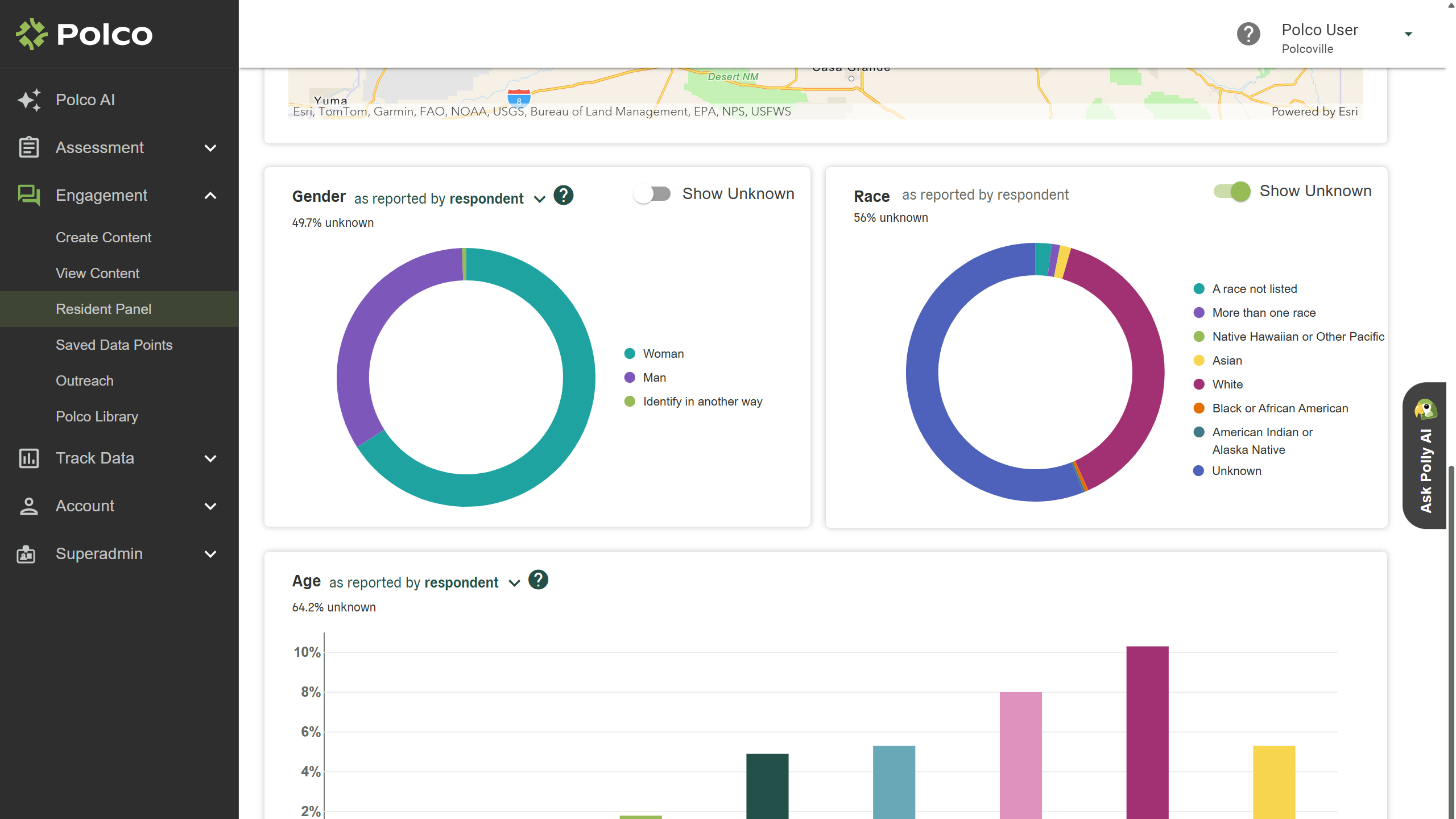
A few features make the data especially defensible. Impacts appear as a live bar plus secondary gauges, so residents watch a budget or a square footage total move as they build their list. Opt-in residency verification lets a resident confirm their identity by legal name after submitting, which keeps their response anonymous while adding it to a separate, more reliable result set you can view on its own. Results are available weighted or unweighted, filtered by audience, and broken down by demographics once a question clears ten responses, a privacy floor that protects respondents.
The feature elected officials tend to love is the instant runoff view. It applies an instant-runoff method to the ranked data to surface the option, or the set of options, with the broadest support, and it flags which rounds still fit within your constraints. In other words, it finds the most-liked set of projects that also fits the budget, not just the raw winner. Prioritize is also available in 31 languages beyond English, which matters for communities that need to reach residents in the language they speak at home.
Where officials put these tools to work
The common thread across both tools is any decision with a real limit, a budget, a footprint, a unit count, or a cap, where people have to select and then live with the consequences. That covers a lot of the work local governments actually do.
Capital improvement plans are a natural fit. When a city has five million dollars for parks but fifteen million in requests, residents spend the real number and show you which cuts are most acceptable. One-time and restricted funds work the same way, with conditional logic that keeps selections inside eligibility rules. Downtown and corridor revitalization, facility programming for a new library or rec center, road sequencing, and comprehensive plan priorities all map cleanly onto the select-and-rank model.
School boards and districts face the same math. Bond and capital referendums, budget shortfall scenarios, program and course offerings, and facilities and safety upgrades are all decisions with a hard limit and a community that wants a say. That is why we ship a dedicated budget template for local education agencies alongside the general city and county template.
What it looks like in real communities
In 2022, Norfolk, Virginia was one of the first cities to use Prioritize to gather input on its American Rescue Plan Act funds. Residents weighed in on the best uses for 154 million dollars, ranking 20 projects in the preliminary investment plan plus seven general funding focus areas, from a regional broadband ring to gap financing for affordable housing. The simulation drew 6,069 page views and 888 submissions, a strong return for a single budget engagement.
Hanford, California took Prioritize somewhere unexpected. The city used it to let residents select and rank the restaurants and stores they wanted downtown. Two simulations pulled nearly 5,000 combined submissions, and one hit a 71 percent submission rate, among the highest the tool has ever seen. It is a useful reminder that the mechanic works for any bounded choice, not only for dollars.
Edmonds School District turned to Budget Simulation during a deficit. The district streamlined its categories to keep the experience clear, shared results and comments publicly, and watched participation grow even after the novelty wore off. The bigger payoff was a shift in tone. Instead of reacting to criticism, staff and board members found themselves in constructive conversations built on a shared understanding of the numbers.
The infrastructure underneath
Because these tools live inside the platform, they connect to more than each other. Polco's AI runs through the simulation lifecycle, helping configure a simulation, structure budget data, draft content, and interpret results, with Polly, our in-product analytics assistant, available to help admins work with their data. Simulations can also draw on Government Performance Action Lab (GPAL) live data and let you bring your own data into the experience. The result is a build that is both easier to stand up and richer than what was possible before.
Why this matters for the people who decide
The value for a city manager, a finance director, or an elected official is straightforward. You get input that is representative rather than anecdotal, weighted to your community rather than skewed to the loudest voices. You can see where consensus exists and where the friction is before you take a vote. And you can point to the process in public and say, honestly, that the decision reflects real resident voices gathered through real tradeoffs. That is how you close the feedback loop and build the kind of trust that lasts past one budget cycle.
If you want to see the Engage platform work with your own numbers, the best next step is a walkthrough with our team.
Request a Demo to see Budget Simulation and Prioritize built around a real decision your community is facing. Prefer to explore first? Try Polco Free and get a feel for the platform on your own time.
Popular posts
Sign-up for Updates
You May Also Like
These Related Stories

Why Polco's Rethinking Budgeting Tools are Essential for Transparent and Effective Budget Planning
Unlock the Power of Community Insight with Polco’s Assess Module