
By Polco on August 17, 2026
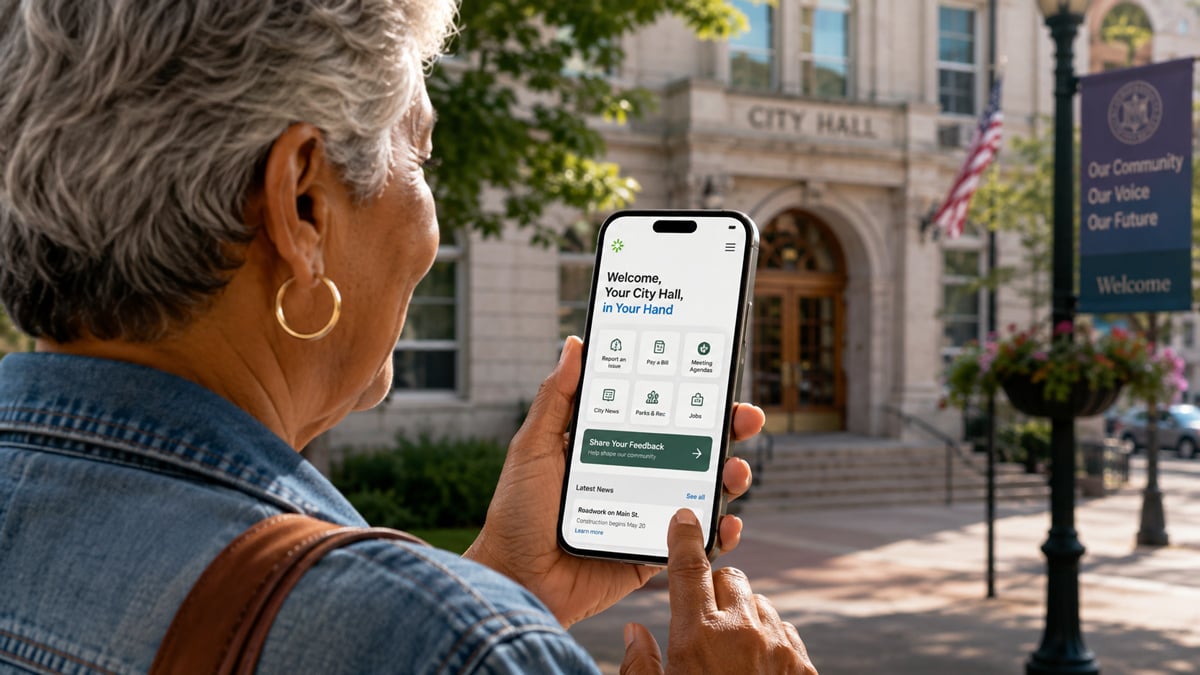
A resident's relationship with their local government rarely begins at a council meeting or a ribbon-cutting. It begins on a screen. Someone searches for the yard-waste pickup schedule. A parent fills out a park permit form at 11 p.m. A homeowner gets a late-night alert about a water main break. A small-business owner tries, for the third time, to figure out which department handles their sign permit.
These moments feel like logistics. They are actually the front door to City Hall — and increasingly, they are City Hall in the mind of the resident. Long before anyone forms an opinion about a budget decision or a zoning vote, they've already drawn conclusions about whether their local government is competent, responsive, and worth trusting. They drew those conclusions from a website, a form, and a notification.
It's time to stop treating those systems as back-office infrastructure and start treating them for what they are: the everyday surface where public trust is either earned or eroded.
The trust local government has, and can lose
Local government starts with an enviable advantage. While confidence in Washington sits near historic lows (the Partnership for Public Service found in 2025 that only about a third of Americans trust the federal government) that skepticism doesn't reach all the way down. Gallup has consistently found that roughly two-thirds of Americans trust their local government to handle local problems, compared to around a third who say the same of Congress. A 2025 Bentley-Gallup survey found that half of Americans trust state and local governments to act in society's best interest, and 60% believe those governments have real power to make a positive difference in people's lives.
The reason is proximity. The closer government feels to daily life, the more credible it becomes. Local government isn't an abstraction; it's the pothole that got fixed, the permit that came through, the alert that arrived in time.
But proximity cuts both ways. When the closest layer of government is also the one people interact with most, every interaction carries weight — and today, most of those interactions happen through a digital touchpoint. That advantage in trust is real, but it is not self-sustaining. It gets renewed, or spent down, one screen at a time.
Infrastructure to some, character to everyone
Inside City Hall, the website is an IT project. The alert system is a line item. The permit portal is something a vendor built two budget cycles ago. These systems get discussed in terms of uptime, compliance, and cost.
Residents don't experience any of that. They experience whether they could find what they needed, whether the form worked, whether the alert made sense, and whether anything actually happened after they hit "submit." To them, a confusing website isn't a technical shortcoming, it's evidence that their government is disorganized. A form that fails silently isn't a bug, it's a sign that no one is paying attention. A notification that's vague or late isn't a glitch, it's a broken promise.
Research bears this out: usable, high-quality digital services are consistently linked to higher satisfaction and greater trust, with the connection running through residents' perception of competence and clarity. One industry analysis found that a strong majority of people say a great digital government experience would increase their trust in public institutions — and that trust translates directly into cooperation, from filling out forms to complying with public-health guidance.
In other words, the digital experience isn't adjacent to the trust question. It is the trust question, for most residents, most of the time.
Four touchpoints, four trust signals
The website is the front counter. For a growing share of residents, the website is the only "visit" to City Hall they'll ever make. A clear, current, easy-to-navigate site signals a government that has its act together. A maze of outdated PDFs, dead links, and jargon signals the opposite. The question isn't "Is the information technically there?" It's "Can an ordinary resident, in a hurry, on a phone, actually find and use it?"
Alerts are the promise to show up. Emergency and service notifications are where government proves it will be there when it matters. Timeliness, plain language, and relevance are everything here. An alert that arrives late, buries the action item, or blasts everyone about something that affects a few blocks teaches residents to tune out — which is exactly the wrong lesson to teach right before the message that really matters.
Forms are a tax on trust. Every field a resident fills out is a small demand for their time, patience, and personal information. A form that's long, confusing, redundant, or broken doesn't just frustrate — it communicates that the government values its own convenience over the resident's. Every question you can remove, pre-fill, or explain is trust returned to the person on the other side of the screen.
Digital services make competence visible. When a resident can request a service, pay a bill, or track a case online and see it actually move, they experience government working. The most underrated trust-builder in this category is follow-through: the confirmation screen, the reference number, the status update, the "we received this and here's what happens next." Silence after submission is one of the fastest ways to convert a hopeful resident into a cynical one.
Principles of trust by design
If digital touchpoints are where trust lives, they deserve to be designed with trust as the goal — not just efficiency or compliance. A few principles:
Clarity is a form of respect. Plain language, obvious next steps, and honest expectations tell residents you value their time and don't assume they should already know how government works.
Follow-through is the message. Confirmations, status updates, and closing the loop matter as much as the initial transaction. A government that acknowledges and responds — even to say "we got it, here's the timeline" — feels fundamentally different from one that goes quiet.
Accessibility is trust. A touchpoint that only works for the tech-savvy, the English-fluent, or the desktop user quietly tells everyone else they matter less. Designing for the resident with the least — the oldest phone, the slowest connection, the greatest hurry — raises the floor for all.
Consistency builds credibility. When the website, the alerts, the forms, and the front desk all say the same thing in the same voice, residents learn the government is coordinated. Contradictions teach them to distrust everything.
Listening should be built in. The best digital touchpoints don't just push information out — they invite input and show residents it was heard. A government that asks, listens, and visibly responds turns one-way transactions into a relationship.
The trust ledger
Trust in local government isn't built only in the big moments — the successful bond measure, the crisis handled well, the popular new park. It's built, or quietly spent, in thousands of small interactions that most leaders never see: the form that worked, the alert that made sense, the confirmation that arrived, the site that answered the question.
Every one of those touchpoints is a small statement about whether this government sees its residents, does what it says, and keeps its word. Treated as infrastructure, they're a cost to be minimized. Treated as part of the trust experience, they become one of the most powerful and underused tools a community has for strengthening the relationship between residents and the institutions meant to serve them.
The screens are already the front door. The only question is what residents conclude about their government once they walk through it.
The same digital channels that can quietly erode trust can just as powerfully rebuild it—when they're designed to listen, not just transact. Polco helps local governments turn everyday digital interactions into two-way relationships, gathering resident input and benchmarked community feedback that show residents their voices are heard and their government is paying attention. See how Polco helps you build trust with your community.

Dashboard Theater: How Local Governments Can Turn Metrics Into Meaningful Action
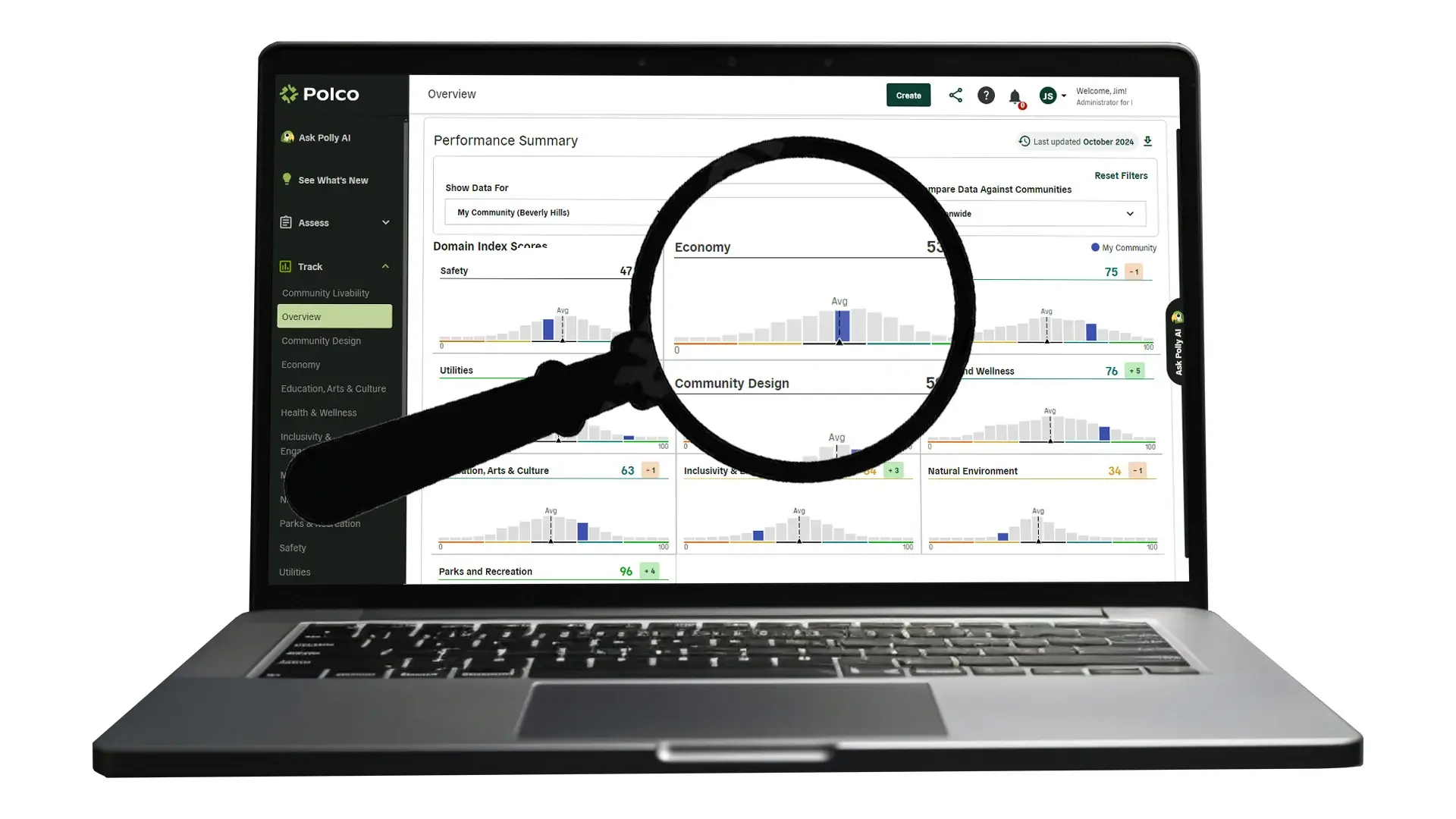
Visual Storytelling: How Histograms Reveal the Secrets Behind Your Data