

By Polco on June 3, 2026
Insights from the Telosa–Polco Community Connections Index at the 2026 ICMA Conference
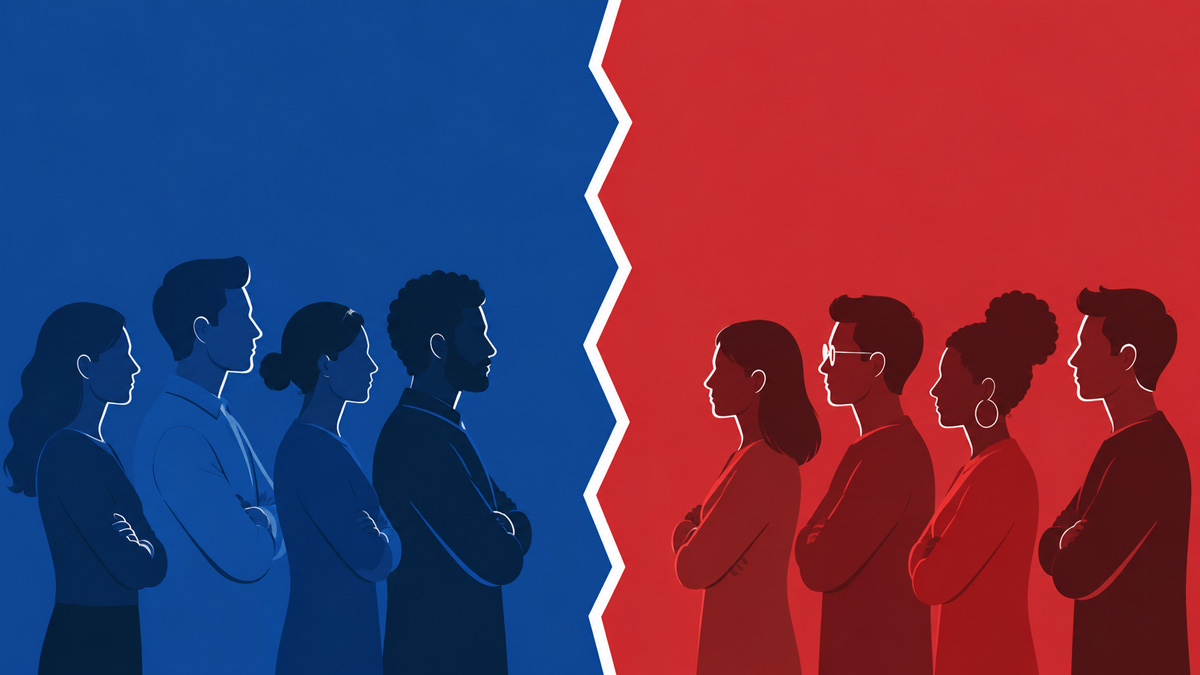
Political polarization is often discussed as a national issue, but its impacts are increasingly felt at the local level. Communities across the country are experiencing growing divisions, declining trust, and fewer opportunities for residents to engage constructively with one another.
At the 2026 ICMA Conference in Philadelphia, the Telosa Foundation and Polco facilitated a workshop exploring a different approach to addressing polarization—one focused not on politics, but on strengthening the conditions that help communities connect, collaborate, and thrive.
As part of the session, approximately 35 local governments from across the United States participated in an interactive assessment using the Community Connections Index (CCI), a framework co-developed by Telosa and Polco to help communities measure the social and civic factors that contribute to connection, belonging, trust, and resilience.
The findings revealed an important lesson: before communities can reduce polarization, they must first understand where connection is breaking down.
Diagnosing Community Connection Before Prescribing Solutions
Many local governments recognize the symptoms of polarization:
- Declining trust in institutions
- Lower civic participation
- Increased conflict during public meetings
- Reduced social interaction across groups
- Growing feelings of isolation and disconnection
The challenge is determining where to focus improvement efforts.
Too often, communities jump directly to solutions without first understanding which factors are contributing most to disconnection. The Community Connections Index was designed to provide that diagnosis.
The framework evaluates six dimensions that research suggests contribute to stronger, more connected communities:
- Social Belonging
- Social Engagement
- Equity and Inclusion
- Strong Institutions
- Civic Participation
- Placemaking
Together, these dimensions provide a more complete picture of community health and help local leaders identify where investments are likely to have the greatest impact.
What We Learned
Workshop participants rated how their communities perform across the six dimensions.
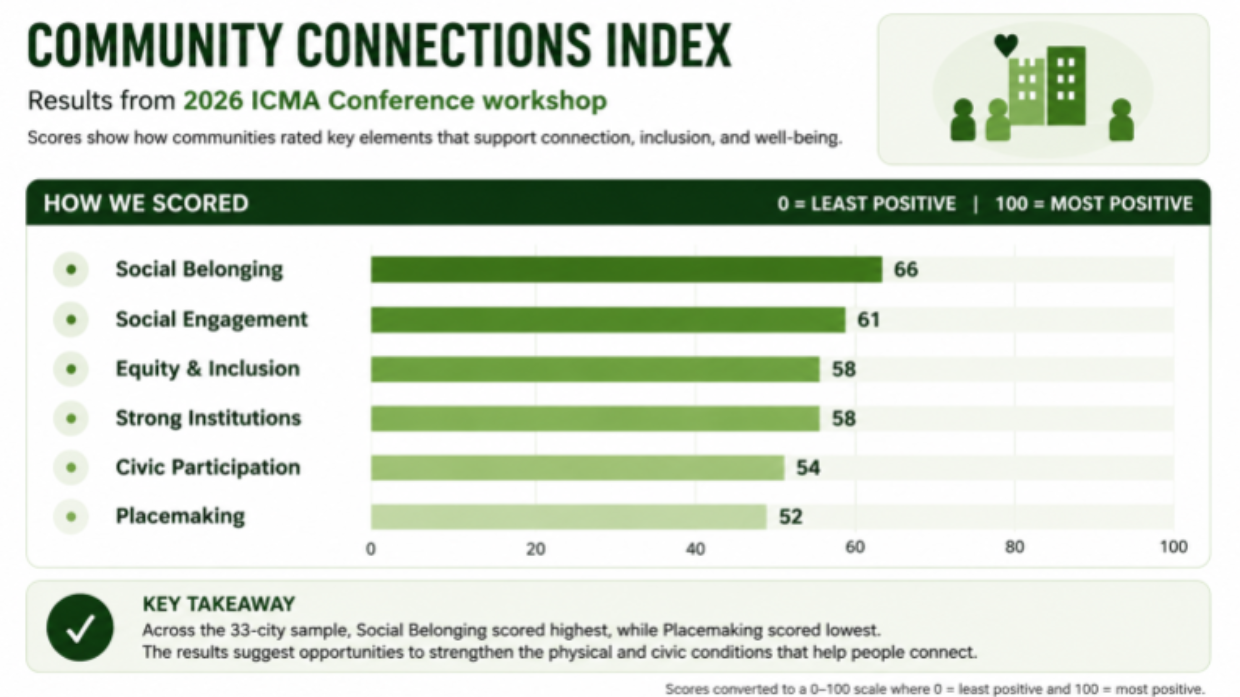
The results showed that communities generally feel strongest in:
- Social Belonging (66)
- Social Engagement (61)
However, lower ratings emerged for:
- Placemaking (52)
- Civic Participation (54)
- Equity and Inclusion (58)
- Strong Institutions (58)
The findings suggest that while many communities have a foundation of social connection, they may be struggling to create the physical and civic environments that help those connections grow and endure.
The Most Important Finding: Placemaking Emerged as the Top Priority
Perhaps the most interesting result emerged when participants were asked where their communities should focus efforts over the next year.
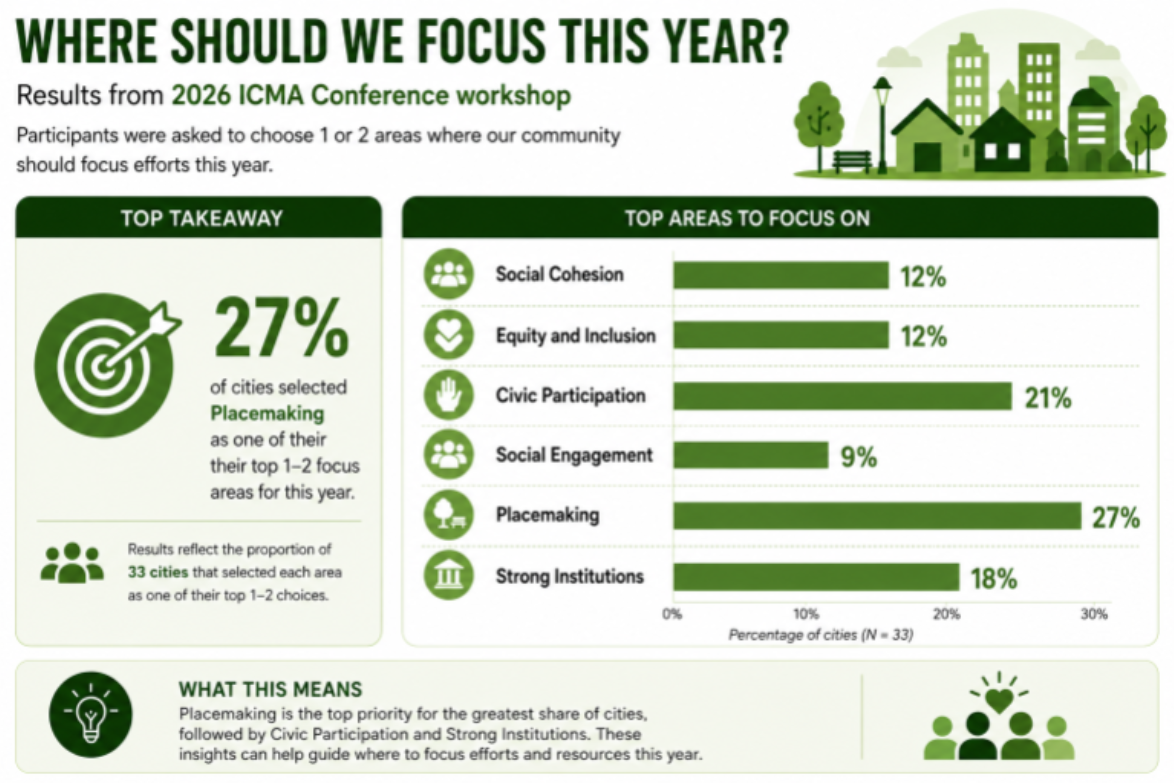
Twenty-seven percent selected Placemaking as one of their top one or two priorities, making it the most frequently selected area for action.
This is significant because Placemaking also received the lowest overall score in the assessment.
In other words, communities not only identified a weakness—they identified a clear opportunity.
Placemaking refers to the design and activation of spaces that encourage interaction and community life, including:
- Parks and public spaces
- Walkable neighborhoods
- Community gathering places
- Public events and programming
- Neighborhood identity and pride
- Opportunities for residents to interact across differences
These places often serve as the infrastructure of connection.
Why Placemaking Matters in Reducing Polarization
When discussions about polarization occur, solutions often focus on communication, dialogue, or civic education.
While these efforts are important, they frequently overlook a more fundamental question:
Do residents have opportunities to encounter and engage with one another in meaningful ways?
Research consistently shows that people are more likely to develop trust and understanding when they share experiences, participate in community activities, and interact in welcoming public spaces.
Placemaking creates the conditions for those interactions to occur.
A vibrant downtown, an active community center, a neighborhood event, or a well-designed public space may seem unrelated to polarization. Yet these are often the places where relationships form, social networks expand, and residents begin to see one another as neighbors rather than opponents.
Reducing polarization is not only about changing opinions. It is about increasing opportunities for connection.
Measuring What Matters
The workshop findings reinforce a key principle behind the Telosa–Polco Community Connections Index:
Communities should diagnose before they prescribe.
The most effective strategies for reducing polarization and strengthening community life begin with understanding where connections are strong, where they are weak, and which investments are likely to make the greatest difference.
For the communities participating in the ICMA workshop, that diagnosis pointed toward a common theme: strengthening the places and spaces that bring people together.
As communities across the country search for ways to rebuild trust, strengthen civic life, and bridge divides, placemaking may represent one of the most practical and actionable places to start.
Learn More About the Community Connections Index
The Community Connections Index, co-developed by Telosa Foundation and Polco, helps local governments measure the social, civic, and environmental conditions that support connection, belonging, trust, and community resilience. By providing a structured diagnostic framework, the Index helps communities identify strengths, uncover gaps, and prioritize strategies that can strengthen social cohesion and reduce polarization.
Telosa and Polco are currently inviting a select group of communities to participate in a Founding Community Cohort that will help shape the next phase of the Community Connections Index while gaining early access to benchmarking, assessment tools, and implementation support.
To learn more about the Community Connections Index or explore participation opportunities, contact the Telosa–Polco team.
Building Stronger Bonds: 2025 Best in Governance Winners for Community Connections
Connected Communities: Unlocking Success Through Social Capital, Trust, and Equity