Somewhere right now, a strategic plan is being written in a conference room. A whiteboard is filling up with goals. Someone is workshopping a vision statement. The words "vibrant," "resilient," and "world-class" are being used without irony.
And almost none of it is grounded in what residents actually experience in the community.
This isn't a knock on the people in that room. Strategic planning is genuinely hard, and the instinct to start with aspiration is a good one. The problem is what comes next: those aspirations get treated as the foundation instead of the finish line. A plan built on what leaders hope is true — rather than what the data says is true — is a plan that sounds great in September and quietly gets ignored by the following spring.
If you're heading into a 2027 planning cycle, the most valuable thing you can do isn't to brainstorm harder. It's to start from the ground.
The problem with the usual process
Most strategic plans are built from three inputs: the last plan, the priorities of whoever is in the room, and a public input process that skews toward the loudest and most available voices. None of those is representative of the community as a whole, and two of them are essentially a mirror — leadership reflecting its own assumptions back at itself.
The result is a plan that's internally coherent and externally disconnected. It optimizes for the goals the organization already had, not the reality residents are living. Then, two years later, when the community's actual satisfaction hasn't moved, everyone wonders why.
Start with the ten livability domains
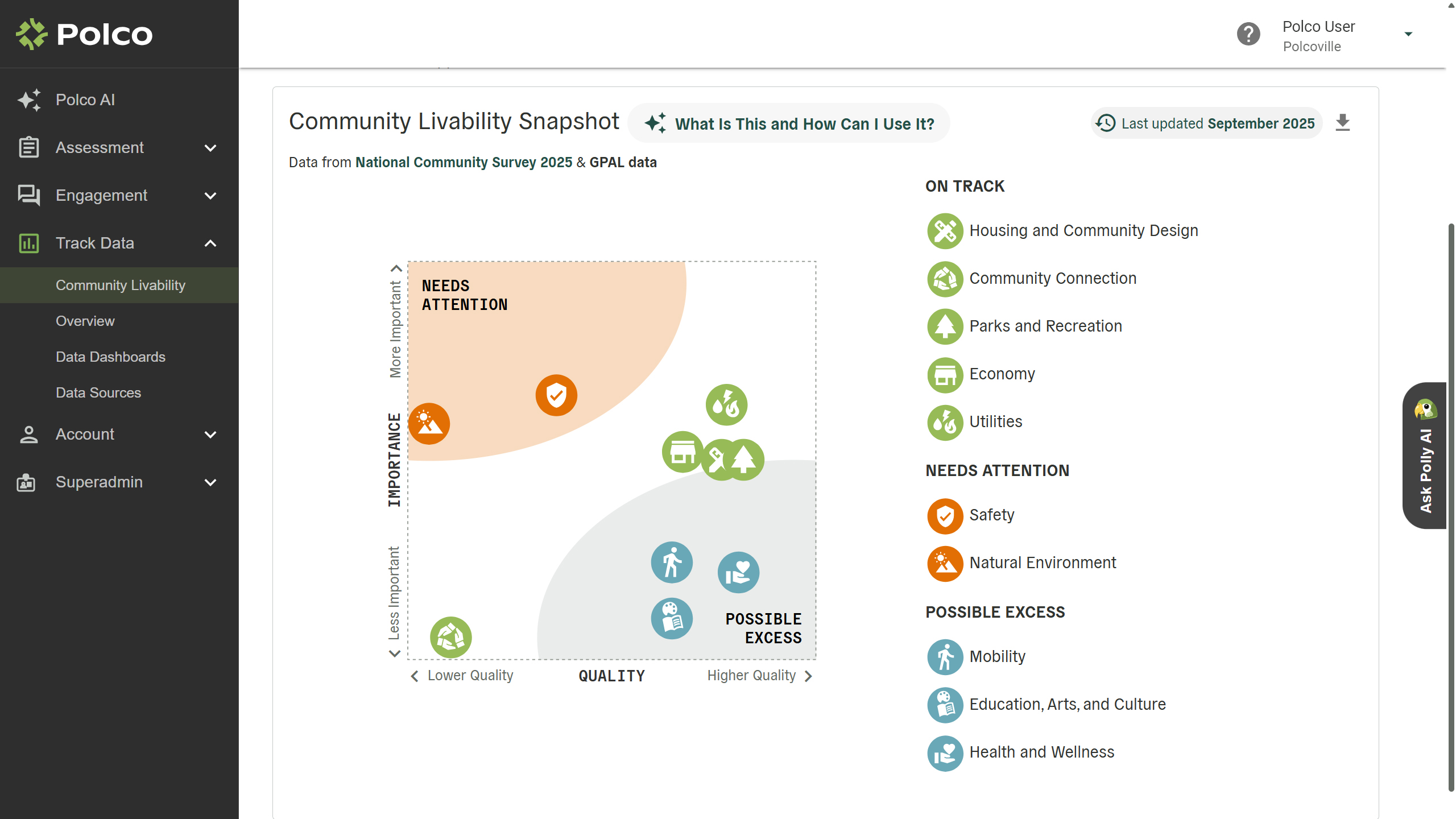
There's a better foundation, and it already exists. Community livability isn't a vibe — it's measurable, and it breaks down into a set of concrete domains that together describe what it's actually like to live somewhere: things like safety, mobility and transportation, the local economy, housing, parks and recreation, the natural environment, health and wellness, community design, education and culture, and the quality of local governance itself.
Each of these is something residents feel every day and something you can measure over time. That's the point. A strategic plan built on these domains isn't starting from a blank whiteboard — it's starting from a diagnosis.
Ground every pillar in evidence
Here's how the domains turn a wish list into a plan:
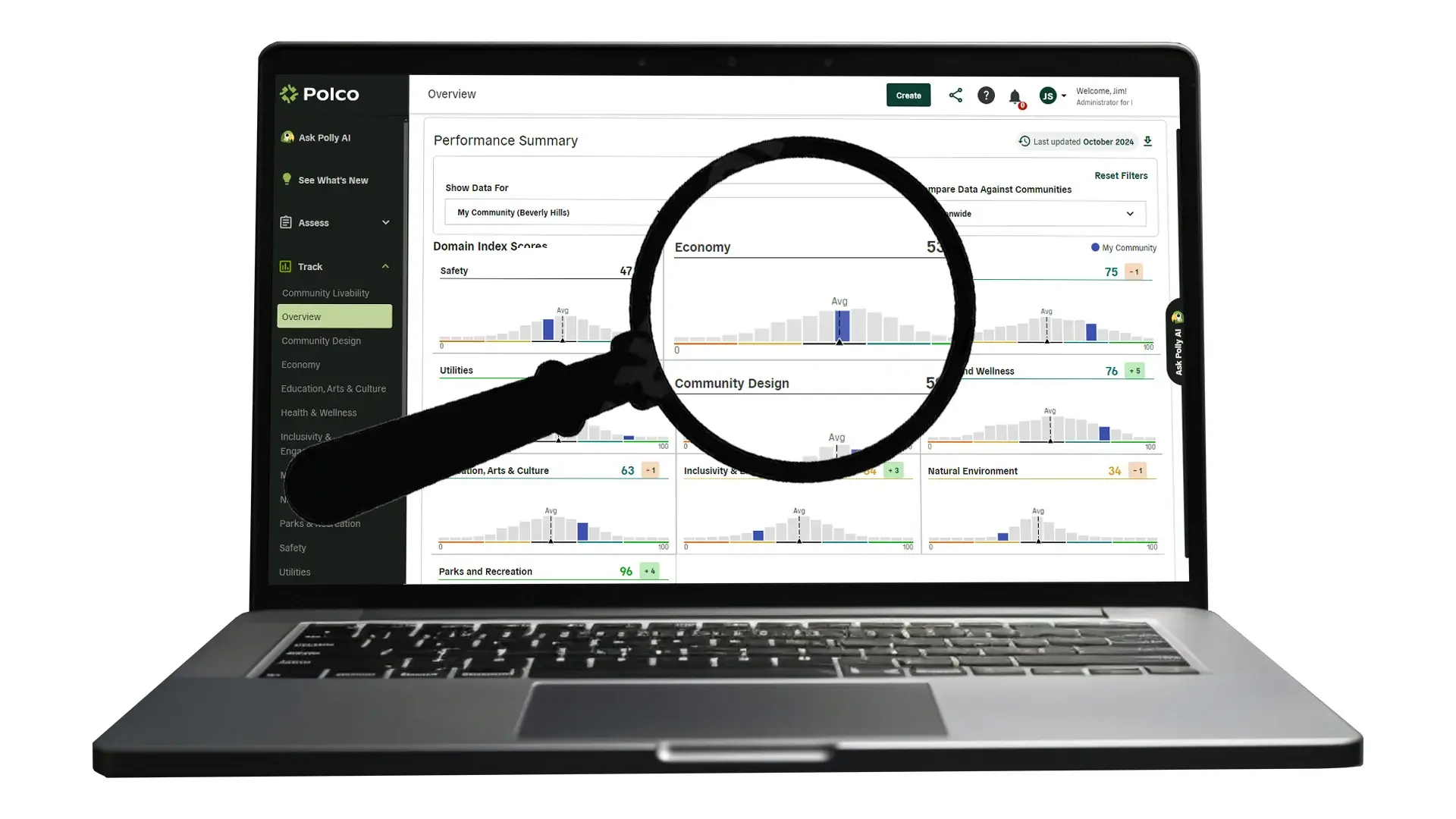
Find where you actually stand. Before you set a single goal, get an honest read on how residents rate each domain today. A benchmark survey like The National Community Survey gives you that read in a way that's statistically representative — not just the people who email the city.
Compare against the right peers. Knowing that 60% of residents rate mobility positively means little in a vacuum. Knowing it's 15 points below comparable communities means everything. Peer benchmarking and comparison groups tell you whether a number is a strength to protect or a gap to close. (We've written before about why comparing yourself to national averages can mislead — the same caution applies here.)
Let the gaps set the priorities. When you can see which domains are lagging, which are declining year over year, and which residents care about most, your strategic priorities stop being a negotiation between departments and start being a response to evidence. That's a plan you can defend at a council meeting and in a budget hearing.
Build the tracking in from day one. The plans that fail are the ones nobody revisits. If your goals map to livability domains you're already tracking, progress isn't a special report you commission in year three — it's a dashboard you check quarterly.
A plan that's still alive in 2028
The difference between a strategic plan that shapes a community and one that gathers dust comes down to whether it was built on assumptions or evidence. Assumptions feel faster in the planning room. Evidence is what's still standing when the room empties out and the real work begins.
You have a planning cycle in front of you. Before the whiteboard fills up, get the diagnosis. The ten domains are already there, already measurable, and already telling you where your community needs you most. Start there, and the vision statement will write itself — and mean something.
See the community data behind stronger strategic plans. Explore Polco Track or Request a Demo.