

The Property Tax Revolt is a Trust Problem in Disguise
By Polco on September 1, 2026

Tax caps and repeal efforts are about to reshape local budgets for a generation. The governments that come through with their credibility intact will be the ones that let residents into the math before the cuts — not after.
Something is shifting under local government, and it isn't a normal down cycle.
This year, voters in seven states will decide 13 statewide ballot measures aimed at property taxes — a dozen of them this November — capping how fast the tax can grow and expanding exemptions. Tennessee voters will weigh a constitutional ban on a state property tax. North Carolina voters will consider forcing the legislature to cap local increases. Oklahoma wants to tighten how much an assessment can rise in a year. And in a handful of other states, campaigns are pushing to scrap the tax entirely — an Ohio effort to abolish it fell short of the 2026 ballot but is regrouping for 2027. Meanwhile, statehouses have been passing rollback bills all year.
The frustration behind all of it is real. Home values climbed, assessments followed, and a lot of residents opened a tax bill that felt divorced from anything they'd voted for. When people feel squeezed, "cut my taxes" is a rational demand.
The problem is what property taxes actually pay for. They are the single most important revenue source local governments have — about 70% of local tax revenue nationwide, according to the Tax Foundation. They fund the fire truck, the pothole crew, the library hours, the ambulance response time. And for schools, the exposure is even sharper: property taxes are the largest single tax source for K-12 education, around 36% of school revenue nationally, and far higher in states where districts lean hard on local levies.
So the reckoning isn't really about a tax. It's about the gap between what residents think they're paying for and what they'd actually lose — and whether local leaders can close that gap before the cuts land.
Why this squeeze is different
Local governments have absorbed revenue shocks before. Recessions come, sales and income tax receipts dip, and then they recover. Property tax caps don't work like that.
A cap is structural. It doesn't bounce back when the economy does — it resets the ceiling permanently and compounds every year afterward. California has lived with Proposition 13 since 1978. Massachusetts has budgeted around Proposition 2½ since 1980. Those aren't historical footnotes; they are the operating reality those states still plan around, decades later. The measures on the ballot this fall will have the same long tail. Whatever passes in 2026 will still be shaping service levels in 2046.
That changes the stakes of how you respond. A one-time shortfall you can paper over with reserves or a hiring freeze. A structural cap forces you to decide, permanently, what your community does and doesn't fund. Those are not decisions any manager or council wants to make alone — and they're not decisions residents will accept quietly if they're made alone.
The trap: cutting quietly
Here's where good governments get into trouble. Facing a squeeze, the instinct is to protect people from the pain — trim a little from every department, defer maintenance, quietly let a few positions go unfilled, and hope no one notices until the pressure passes.
But the pressure isn't going to pass, and residents do notice. They notice when the pool opens late, when the plow comes slower, when the wait at the permit counter doubles. What they don't see is the trade-off you made to get there, or the fact that they asked for exactly this when they voted for the cap. They just experience decline with no explanation attached to it.
That's the quiet danger of the property tax reckoning: it doesn't just take money out of your budget. It takes legitimacy out of your government. Cuts made in the dark read as incompetence or indifference. And a community that feels its government is failing is a community primed to vote for the next, deeper cap. The squeeze becomes a spiral.
The way out isn't a better argument. You cannot out-message a tax revolt with a press release about fiscal responsibility. The way out is to change who's in the room when the trade-offs get made.
Make residents co-owners of the math
The property tax revolt is, in large part, an information failure and a trust failure. People don't know what their taxes buy, and they don't believe they have any real say in how the money is spent. Fix those two things and the whole dynamic changes. There are two concrete moves that do it.
First, show residents where the money actually goes. Most people have never seen their tax bill broken down into services. A Taxpayer Receipt does exactly that — it takes a household's bill and translates it into plain terms: this much to public safety, this much to roads, this much to parks, this much to the schools. It reframes the conversation from "why is my bill so high" to "is this the mix I want?" You can't have an honest debate about cuts with people who think their taxes vanish into a black hole. The receipt turns the black box into a menu.
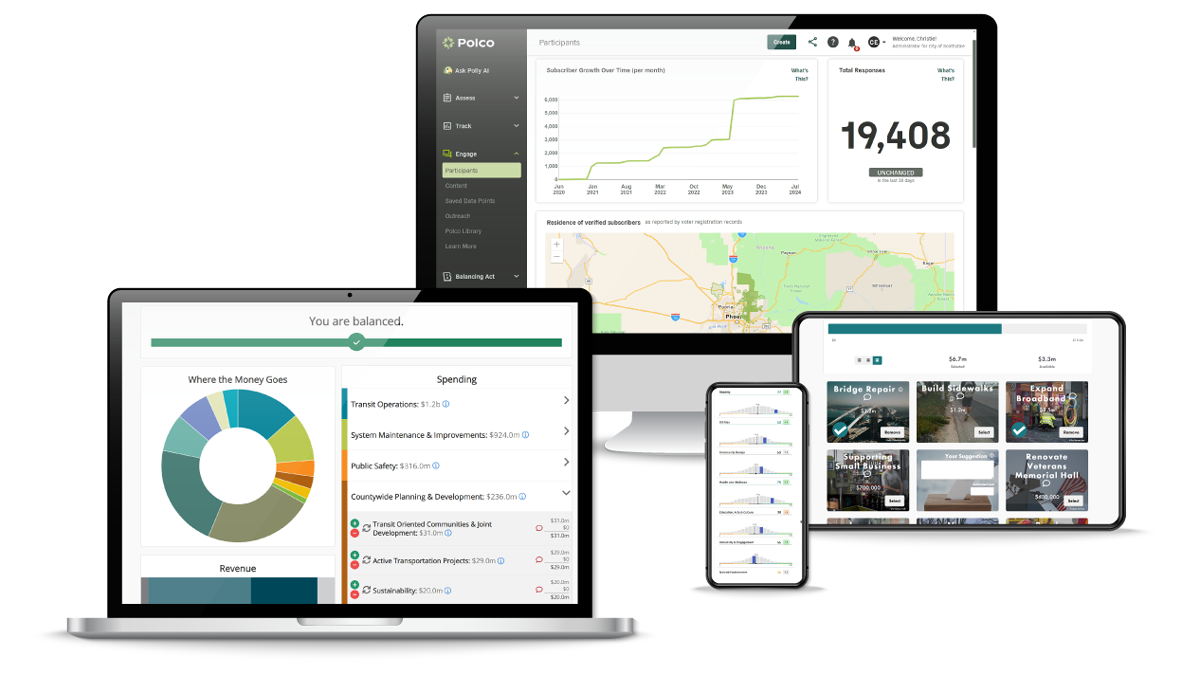
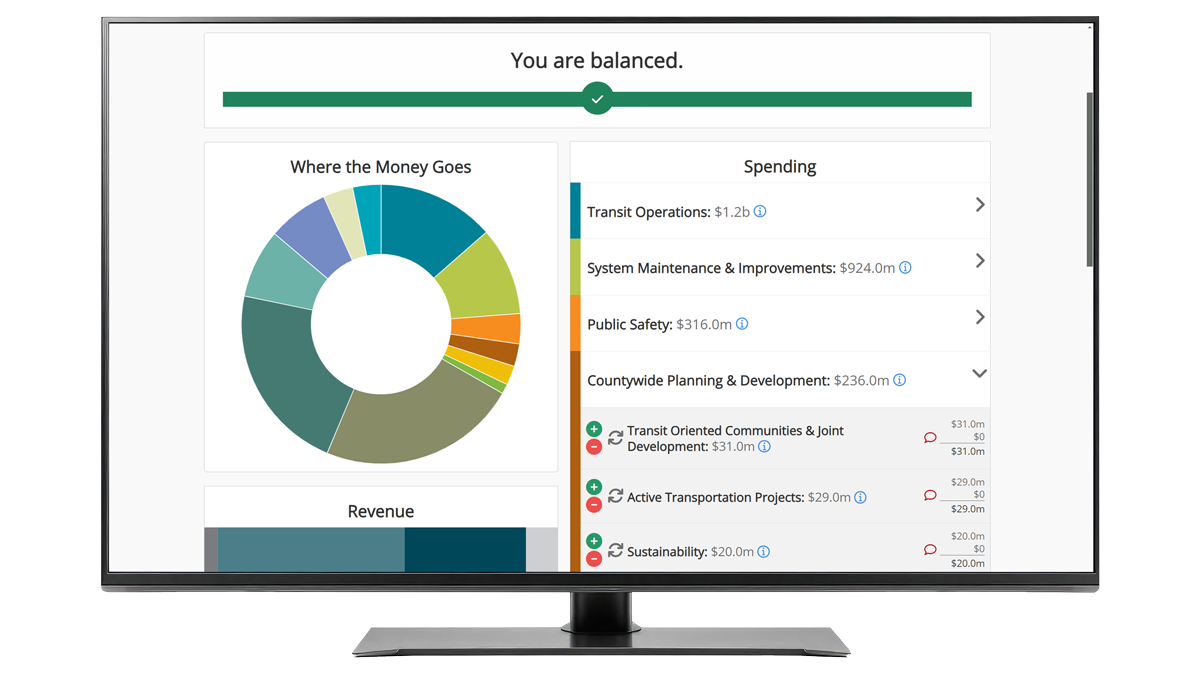
Second, let residents make the trade-offs with you. This is where a tool like Budget Simulation earns its place. Instead of asking residents whether they'd like lower taxes — of course they would — you hand them the same constrained budget you're working with and ask them to balance it. Close the gap yourself. Suddenly "cut waste" has to become "here's the specific thing I'd cut," and most people discover very quickly that there's no painless dollar in the budget. They come out the other side with something they didn't have going in: an understanding of the trade-offs, and a stake in the outcome.
That shift — from asking residents for their opinion to trusting them with the actual math — is the difference between engagement that decorates a decision and engagement that legitimizes one.
Survivable and defensible
Those two moves do more than make residents feel heard. They make your eventual decisions both survivable and defensible.
Defensible, because you're no longer guessing what the community values. When you close a facility or reprioritize a program, you can point to representative input — not the twelve people who showed up to the hearing, but a real cross-section of residents who saw the constraints and made the same hard calls you did. That's the evidence that holds up in front of a skeptical council, a local reporter, or a resident who's furious about their branch library.
Survivable, because residents who helped set the priorities are far less likely to revolt against them. People will accept a cut they understand and helped shape. They will not accept a cut that appears out of nowhere. Shared ownership is the cheapest insurance a government can buy against the next ballot measure.
For school districts, this is close to existential. When so much of your budget rides on local property tax, and the state is dangling relief that shifts costs onto you, the community's understanding of the trade-offs isn't a nice-to-have — it's the thing that determines whether your next levy or referendum passes. The districts that engage families on the math now will be the ones still funding programs in five years.
The window is now
The worst time to build this relationship is in the middle of the crisis. If you wait until the cap has passed and the shortfall is real, engagement looks like damage control, and residents read it that way.
The window is before. Before the ballot, before the cut, while there's still time to show people what their taxes buy and invite them into the choices ahead. Build the evidence base and the trust while the stakes are still hypothetical, and you'll have both when the stakes are real.
The property tax reckoning is coming to most communities in one form or another. Your residents will experience it either as something done to them or as something decided with them. That's the one variable you still control — and it's the one that will define whether your government comes out of this era trusted or just smaller.
Polco helps local governments and school districts turn resident input into decisions they can defend, with tools like Budget Simulation and the Taxpayer Receipt. Request a demo to see how.
Popular posts
Sign-up for Updates
You May Also Like
These Related Stories
5 Lessons Cities Learned From Opening Their Budget Process to the Public
What Residents Learn When You Show Them the Trade-Offs
