
By Polco on February 19, 2026
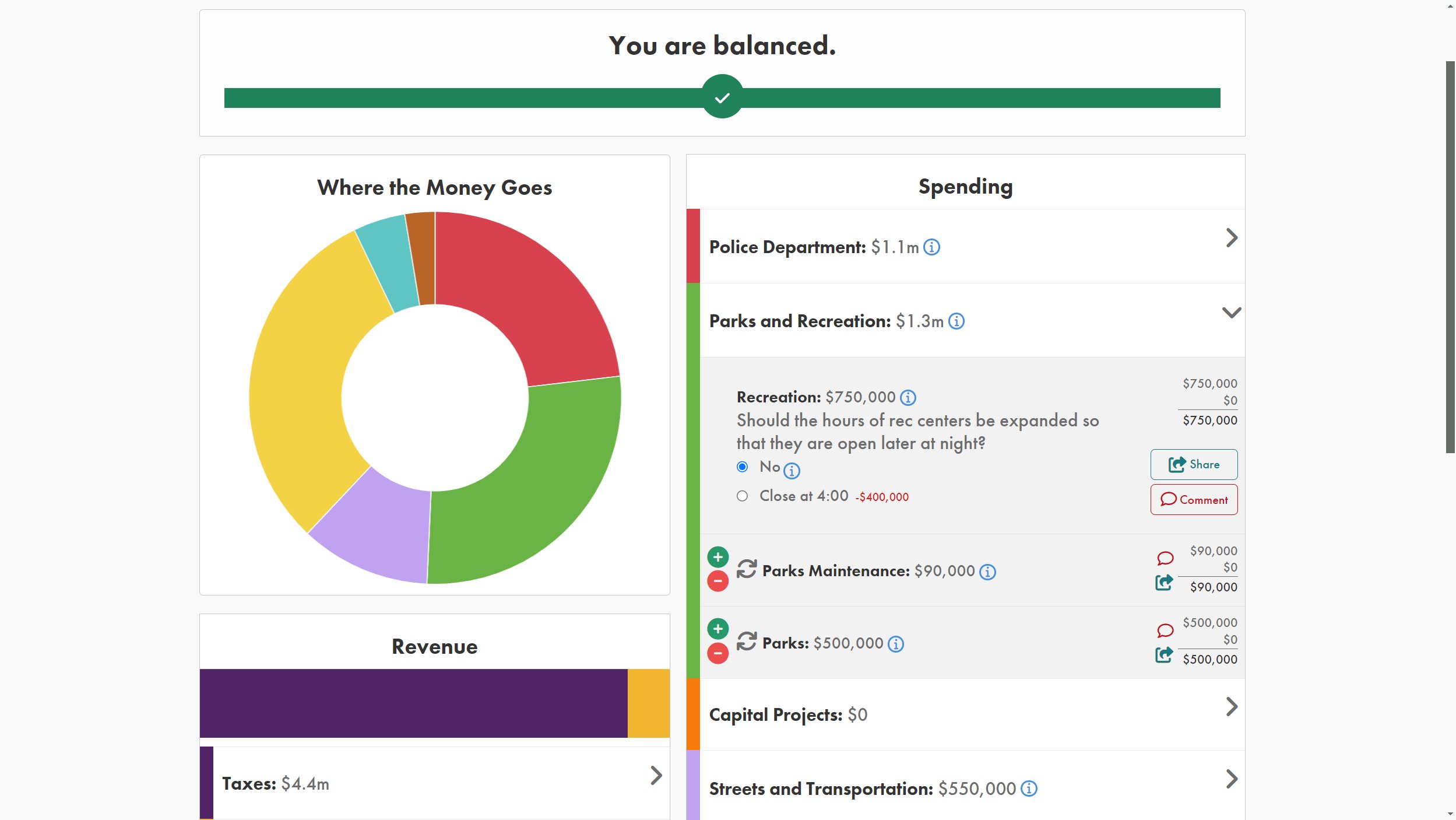
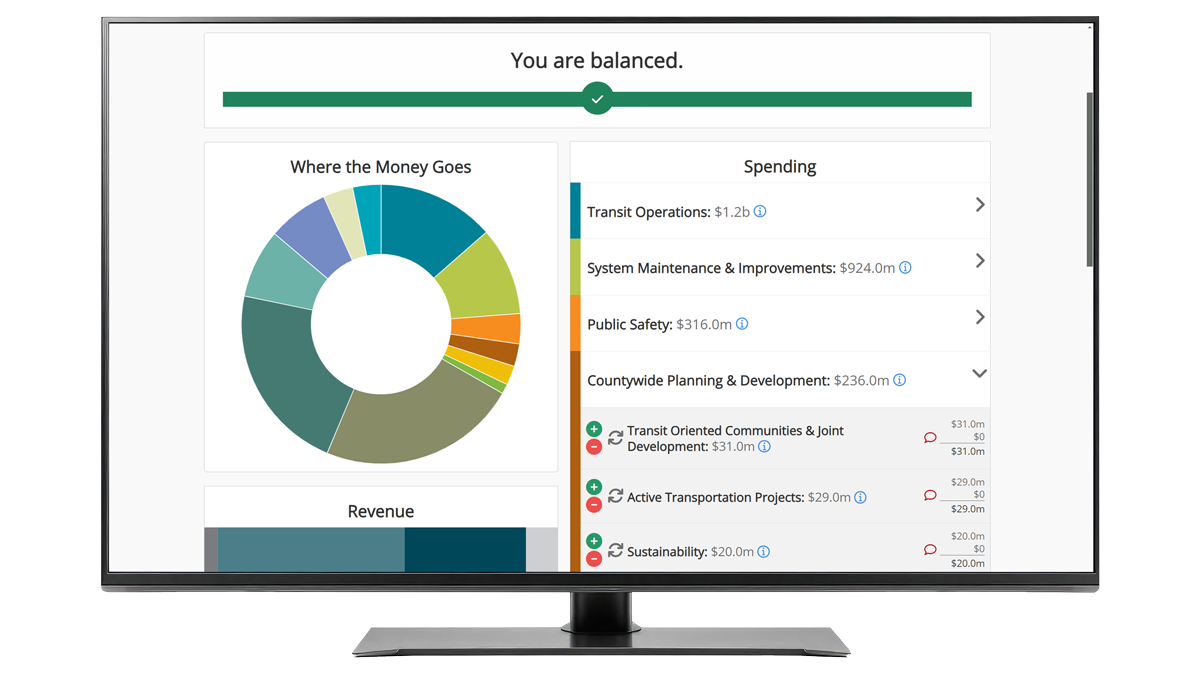
Local government budgeting is often described as a numbers exercise. But anyone who has ever participated in the process knows it is really about values, trade-offs, and competing priorities. The challenge is that most residents rarely get to see these tensions up close. They may encounter the final budget document or hear debates at a public meeting, but the intricate decision-making behind the scenes usually remains invisible.
That changes the moment residents attempt to balance a budget themselves.
Across the country, communities using interactive budget exercises have uncovered something powerful. When residents explore real financial constraints and experiment with their own choices, their understanding deepens. Their assumptions shift, and leaders gain insights that would never surface in a traditional town hall.
Here are the most important lessons cities learn when they hand residents the budget controls.
1. People Understand Trade-Offs Better Than Leaders Expect
When residents interact with real budget numbers and see immediate impacts, they begin to understand that every choice has consequences. Increasing funding for one service requires reducing another or finding new revenue.
This shift from abstract debate to concrete decision-making is transformative. It echoes the goals described in Rethinking Budgeting, which emphasizes the importance of framing trade-offs in a clear and accessible way for the public.
Communities consistently discover that residents rise to the challenge. They make thoughtful, balanced decisions and often seek compromise. The conversation becomes less about “why doesn’t the city do more” and more about “here is where I believe we should prioritize.”
2. Residents Reveal Which Services They Value Most
Traditional public meetings often attract people who are passionate about a single issue. Interactive budgeting shifts the focus to the full picture. Residents must consider streets, public safety, parks, housing, utilities, libraries, and more - all at once.
This helps leaders identify consistent patterns in what people are willing to invest in or reduce.
For example, communities like Santa Barbara County and Shakopee discovered which services residents felt were worth additional investment and which areas had room for adjustment. These insights helped shape real policy decisions and public communications.
When residents choose for themselves instead of reacting to proposals, leaders gain clearer and more authentic information.
3. Misperceptions About Costs Become Immediately Visible
Many people assume certain services are extremely expensive or extremely cheap. When residents start adjusting line items, these assumptions surface quickly.
Common surprises include:
- How much of the budget is committed to essential services
- How little discretionary funding actually exists
- How modest adjustments can have outsized impacts
- How major reductions in popular services barely move the needle
These moments become powerful teaching opportunities. Visibility is one of the reasons modern simulations strengthen trust, they show financial realities instead of asking residents to simply accept them.
4. Input Becomes More Constructive and Less Confrontational
Cities frequently report that resident conversations change after people try balancing a budget themselves. Complaints become questions. Criticism becomes curiosity.
This mirrors what early adopters like Hartford saw when they introduced interactive public engagement around budgeting. The process helped residents and leaders build a shared understanding of the city’s constraints and choices.
When people experience the challenge firsthand, they appreciate the complexity instead of questioning motives or competence.
5. Leaders Receive More Actionable Data
Traditional feedback methods often produce vague input:
- “Spend more on public safety.”
- “Cut waste.”
- “Fix the roads.”
Interactive budget participation produces far more specific insights:
- How much more funding residents believe is appropriate
- What they are willing to reduce to pay for it
- Whether they prefer service changes or revenue changes
- Where values differ among demographic groups
This type of detailed input aligns perfectly with the goals of modern public engagement: clear data, visible priorities, and informed decision-making, not just sentiment.
6. Transparency Builds Trust
When residents can explore the budget themselves, the budgeting process feels less mysterious. The city is no longer a “black box.” Instead, residents see the same numbers and constraints their leaders do.
This approach reflects Polco’s broader mission of trust and transparency, and supports research showing that when people understand the reasoning behind decisions, satisfaction with government increases.
Even when residents disagree with the final decisions, they are more likely to believe the process was fair.
Why This Matters
Giving residents the opportunity to try balancing a budget isn’t about turning them into finance experts. It is about bringing people into a complex conversation in a way that is interactive, educational, and empowering.
The results are consistent:
- Better understanding
- Better input
- Better public discourse
- Better alignment between community values and public spending
When residents try balancing the budget themselves, they learn something important. But just as importantly, their city learns from them.
Want to Explore How Your Community Can Learn from Budget Participation?
If you’d like help creating an interactive, informed, and transparent budget conversation in your community, our team can walk you through best practices, examples, and engagement strategies.
Connect with Polco to start building a more collaborative budget process.


The Winter Budget Challenge: Why Transparency Matters Now More Than Ever

From Three Minutes at the Mic to Online Engagement