
By Polco on October 28, 2026
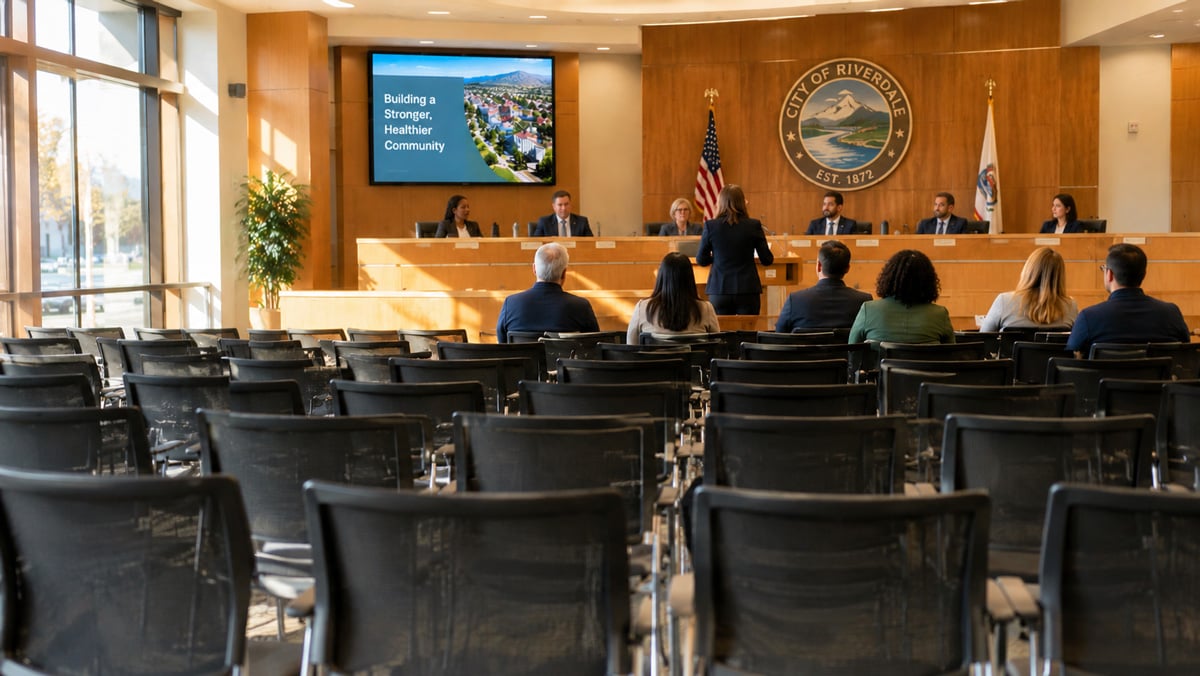
The residents who never come to a council meeting still have opinions about your community. They have views on the potholes on their street, the new development downtown, and whether their tax dollars are being spent well. You just aren't hearing them.
It's tempting to read that quiet as a good sign. No angry emails, no packed chambers, no complaints at the counter. But silence isn't a verdict. It's a gap in your information, and the decisions you make inside that gap carry real risk.
Here's why the quiet majority deserves more of your attention, and how to hear from them before their silence turns into something louder.
Why "no news is good news" doesn't hold up
"No news is good news" assumes residents who are unhappy will tell you. Most won't. Speaking up takes time, confidence, and a belief that it will make a difference. Plenty of residents with real concerns have none of the three.
Silence can mean many things:
- Satisfaction. Some residents genuinely think things are fine.
- Disengagement. Others have tuned out. They don't follow local issues closely and don't feel connected to city hall.
- Resignation. Some spoke up once, saw nothing change, and decided it wasn't worth trying again.
- Barriers. Many simply can't make a 6 p.m. Tuesday meeting. Shift work, childcare, language, and transportation all get in the way.
From the dais, these four groups look identical. They all show up as an empty seat. That's the core problem: when you treat silence as consent, you're making a guess and calling it a finding.
And quiet opinions don't stay quiet forever. They surface at the ballot box, in a sudden wave of opposition to a project you thought was settled, or in falling trust that's hard to rebuild. By then, you're reacting instead of planning.
The room isn't the community
The people who do speak up aren't a random sample. Researchers at Boston University tested this directly. Katherine Levine Einstein, Maxwell Palmer, and David Glick coded thousands of public comments at planning and zoning meetings across 97 Massachusetts cities and towns, then matched speakers to the voter file.
The speakers skewed older, male, longtime residents, regular local voters, and homeowners. Their views also differed from the broader public: they opposed new housing at much higher rates than residents overall.
You might expect virtual meetings to fix this. They didn't. When meetings moved online during the pandemic, the same researchers found participants were still skewed toward older homeowners. Lowering the barrier to attend wasn't enough to change who showed up (BU Initiative on Cities).
The takeaway isn't that the people at the podium are wrong. Their concerns are real and deserve a hearing. But they are one slice of your community, not a stand-in for all of it. If public comment is your main read on resident sentiment, you're likely getting a distorted picture.
Silence is measurable
Here's the good news: you don't have to guess what the quiet majority thinks. Disengagement leaves a footprint, and you can measure it.
Compare who participates to who lives there. Pull demographics for your commenters, survey respondents, and meeting attendees, then set them against Census data for your community. If renters are 45% of your households but 10% of your input, that gap is a finding in itself. It tells you exactly whose voices are missing.
Map participation by geography. Plot engagement by neighborhood or ward. Clusters of silence often line up with the areas most affected by decisions and least connected to city hall.
Ask residents directly — with a representative sample. A statistically valid survey uses random sampling and weighting so results reflect the whole community, not just the most motivated voices. Polco's National Community Survey™ (The NCS™), for example, measures resident opinions on services and public trust, tracks civic engagement behaviors, and benchmarks results against more than 500 other communities.
Track trust over time. Ratings of government performance, confidence in decision-making, and whether residents feel welcome to participate are leading indicators. A slow slide in these numbers is often the first sign that silence is turning into disengagement.
Compare open input to scientific results. When you run both an open-participation survey and a random-sample survey, the differences are telling. Where they agree, you can act with confidence. Where they diverge, you've found the space between the loudest voices and everyone else.
How to hear the residents who aren't in the room
Measuring the gap is step one. Closing it takes deliberate outreach. Build strategies for residents who don't want to attend meetings at all, and to think harder about which issues truly need a meeting. Here's what that looks like in practice.
- Start with a representative baseline. A random-sample survey gives you a reliable read on the whole community. Use it as the yardstick for everything else you hear.
- Meet residents on their schedule. Offer ways to weigh in that don't require showing up at a set time. Short online surveys, mobile-friendly tools, and input windows that stay open for days or weeks reach people a single evening meeting never will.
- Go where people already are. Libraries, farmers markets, school events, grocery stores, and apartment complexes. A QR code on a utility bill or a table at a community event can reach residents who'd never visit city hall.
- Lean on trusted messengers. Faith leaders, community organizers, and neighborhood groups already have relationships you don't. Ask them to share the opportunity to participate.
- Remove practical barriers. Translate materials, keep questions short and jargon-free, and make tools accessible on any device.
- Make trade-offs concrete. Abstract questions get abstract answers. Tools like a budget simulation let residents balance real priorities and constraints, which surfaces what they actually value, not just what they oppose.
- Watch your mix while input is open. Check participation against your community's demographics as responses come in. If a group is underrepresented, redirect outreach before the window closes.
- Close the loop. Tell residents what you heard and what you did with it. Showing that input changed a decision is the strongest argument for participating next time.
Silence is a signal. Treat it like one.
An empty seat at a public meeting isn't a vote of confidence. It's a question you haven't answered yet. The residents you never hear from are still forming opinions about your services, your priorities, and whether local government is working for them.
The communities that build lasting trust don't wait for those opinions to show up as complaints or surprises. They go looking for them, measure what they find, and act on it.
Ready to hear from your whole community? Polco helps local governments reach beyond the usual voices with statistically valid surveys, national benchmarks, and engagement tools built for busy residents.


What Communities with the Highest Resident Satisfaction Scores Have in Common

The Digital Public Square: How Local Government Can Be the Anchor of Reliability