

By Polco on December 17, 2025

Trust is no longer a byproduct of good government. It is the foundation it stands on.
Trust has become a form of infrastructure. It determines whether residents engage, whether data is believed, and whether decisions are accepted, even when they are difficult.
The Trust Gap Facing Local Governments
Across the country, public officials are facing a familiar reality. Residents are skeptical. Participation is uneven. Meetings attract the same voices, while many others disengage entirely.
This is not because residents do not care. It is because too many people feel their input does not matter, or that decisions are made before feedback is collected.
Trust breaks down when residents:
- Do not understand how decisions are made.
- Cannot see how data or feedback is used.
- Feel engagement is performative rather than meaningful.
Rebuilding trust requires more than better messaging. It requires changing how decisions are informed, explained, and shared.
Transparency Turns Process Into Proof
Transparency is often misunderstood as simply publishing information. Posting a report or uploading a budget PDF is not transparency if residents cannot interpret it.
Real transparency answers three questions clearly:
- What is happening?
- Why is it happening?
- How does this affect me and my community?
When governments translate complex data into accessible visuals, plain language explanations, and real trade‑offs, transparency becomes proof of good faith. Residents no longer have to assume. They can see the logic behind decisions.
Transparency, done well, removes suspicion by replacing it with clarity.
Data Builds Credibility, Not Just Insight
Opinions are important, but decisions grounded only in anecdotes are vulnerable. Data adds credibility by showing patterns, trends, and gaps that individual stories cannot.
Trusted data does three critical things:
- It grounds conversations in shared facts.
- It reduces the influence of the loudest voices.
- It helps leaders explain not just what they chose, but why.
When residents see that decisions are informed by reliable data and not political instinct alone, confidence grows. Data becomes a neutral anchor in otherwise emotional discussions.
Feedback Creates Ownership
Trust accelerates when residents recognize their fingerprints on outcomes.
Asking for feedback is not enough. People need to see the connection between what they shared and what changed. This is where many engagement efforts fall short.
Effective feedback loops:
- Invite input early, before decisions are finalized.
- Reach beyond the usual participants.
- Close the loop by showing how feedback shaped next steps.
When governments treat feedback as an input, not a checkbox, residents shift from critics to collaborators. Ownership replaces opposition.
Trust Enables Better Decisions
Trust does not mean everyone agrees. It means people believe the process was fair, informed, and inclusive.
Communities with higher trust:
- Navigate trade‑offs more constructively.
- Recover faster from controversial decisions.
- Are more willing to engage again in the future.
In this way, trust compounds. Each transparent decision, each data‑informed explanation, and each visible use of feedback strengthens the foundation for the next challenge.
Building Trust Is Ongoing Work
Unlike roads or buildings, trust is never finished. It requires consistent investment.
That investment looks like:
- Making engagement accessible and continuous.
- Using data to inform, not obscure.
- Explaining decisions with honesty and clarity.
- Showing residents how their voices matter.
Local governments that treat trust as core infrastructure are better equipped for today’s complexity. They lead with clarity, act with confidence, and build communities that are not just informed, but connected.
In the end, trust is what allows everything else to work.
Where Polco Fits In
Building trust requires more than intention. It requires systems that make transparency real, data credible, and feedback visible.
Polco helps communities strengthen trust by bringing these elements together in one connected experience. Through accessible engagement tools, trusted data, and clear ways to show how resident input shapes decisions, Polco supports governments in turning openness into action.
When residents can see the data behind decisions, understand the trade-offs, and recognize their voice in the outcome, trust grows. Not because government asked for it, but because it earned it.


What Communities with the Highest Resident Satisfaction Scores Have in Common
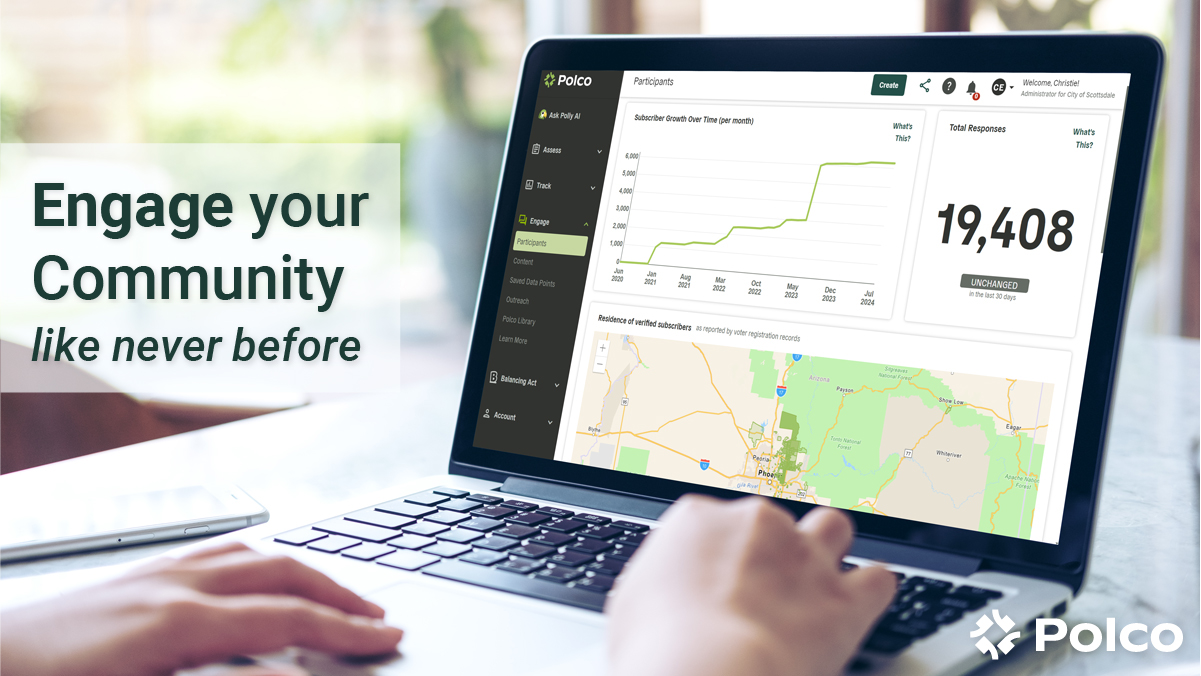
Engage Your Community like never before with Polco’s Engage Module